Two villas, two ways to look at the sea
Ravello is about 350 meters above sea level, above Amalfi and Minori, and its two best-known villas make the most of that position in different ways. Villa Rufolo, very close to the cathedral square, is a medieval complex with architecture, courtyards, and terraced gardens. Villa Cimbrone, at the far end of town, is above all a route of avenues, pergolas, and belvederes.
Visiting both is easy, but it helps to know what to expect: the first reads like a historical narrative, the second like a long walk toward the horizon.
Villa Rufolo: a thirteenth-century legacy
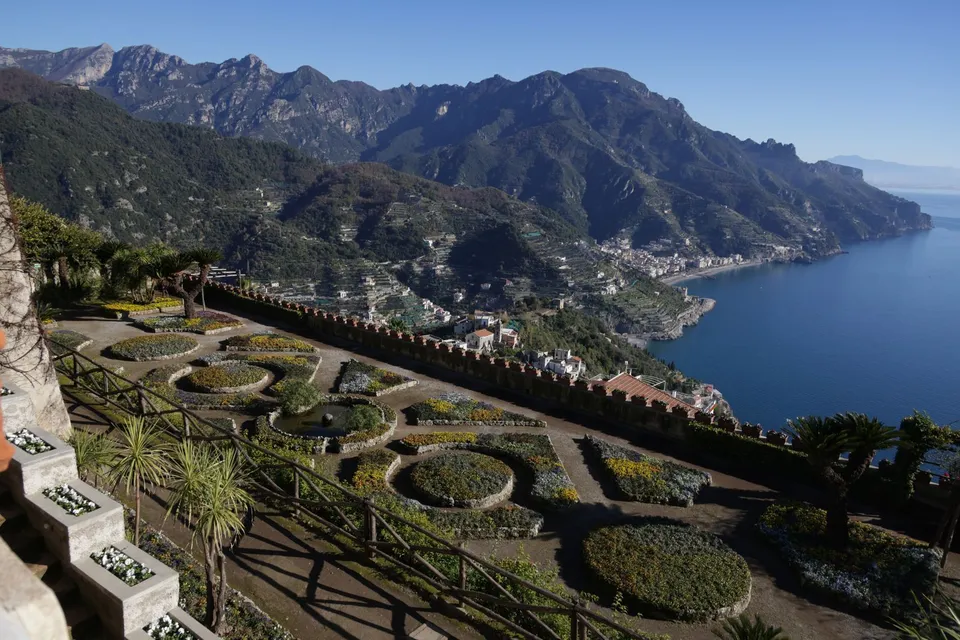
The villa dates back to the 13th century, to the period when Ravello was a prosperous center well connected with the Mediterranean. It takes its name from the Rufolo family, one of the most prominent of the time. Over the centuries, the property went through phases of abandonment, until the 19th-century restoration desired by the Scot Francis Nevile Reid, who bought it in 1851 and oversaw its recovery and gardens.
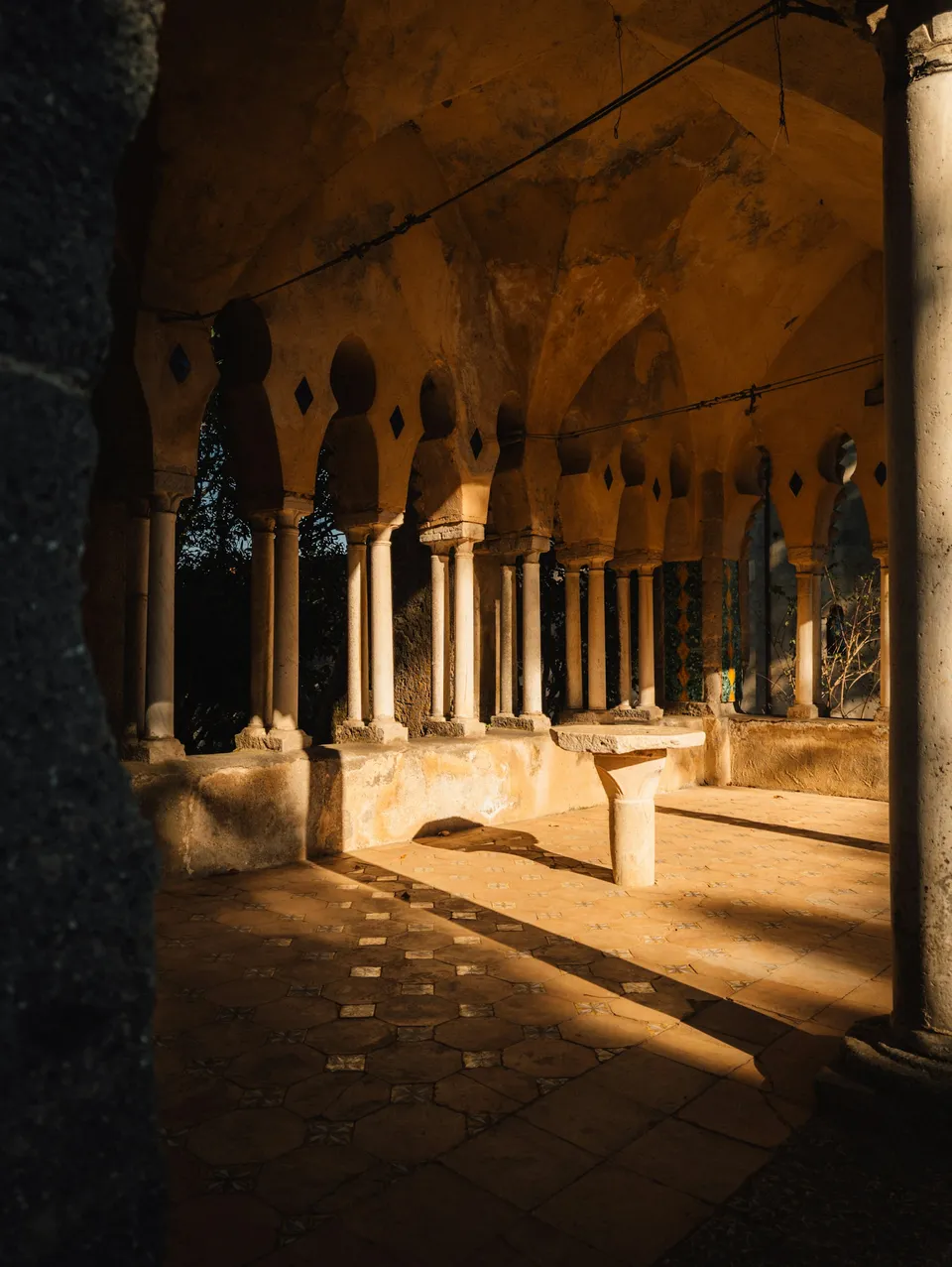
The layout preserves a strong medieval character, with Arab-Sicilian influences especially visible in the arches and the cloister.
What to see inside Villa Rufolo
The route starts from the entrance tower and continues among courtyards, historic buildings, and well-tended flowerbeds. It is worth slowing down in a few spots:
- the cloister with its interlaced arches, among the villa’s most photographed corners;
- the flower gardens, with open views over the coast;
- the belvedere, where in summer the suspended stage of the Ravello Festival is set up, with the sea as a backdrop.
Richard Wagner stayed here in 1880 and found in these gardens the inspiration for Klingsor’s garden in Parsifal. It is an association that comes through clearly in the late morning or late afternoon, when the light softens the colors.
Villa Cimbrone and the Viale dell'Immenso
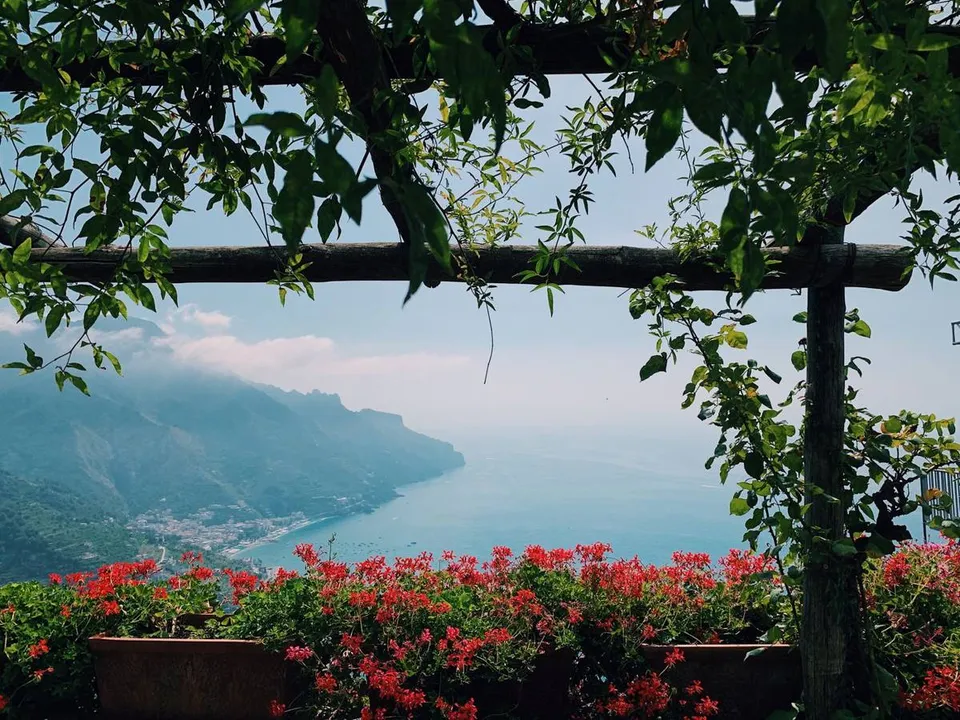
To get there, walk from the center along roads and alleys on a gentle uphill stretch, a route that is part of the experience. Inside, the heart of the visit is the Viale dell'Immenso, a long tree-lined and flower-filled path that crosses the garden and leads to the most scenic point of the property.
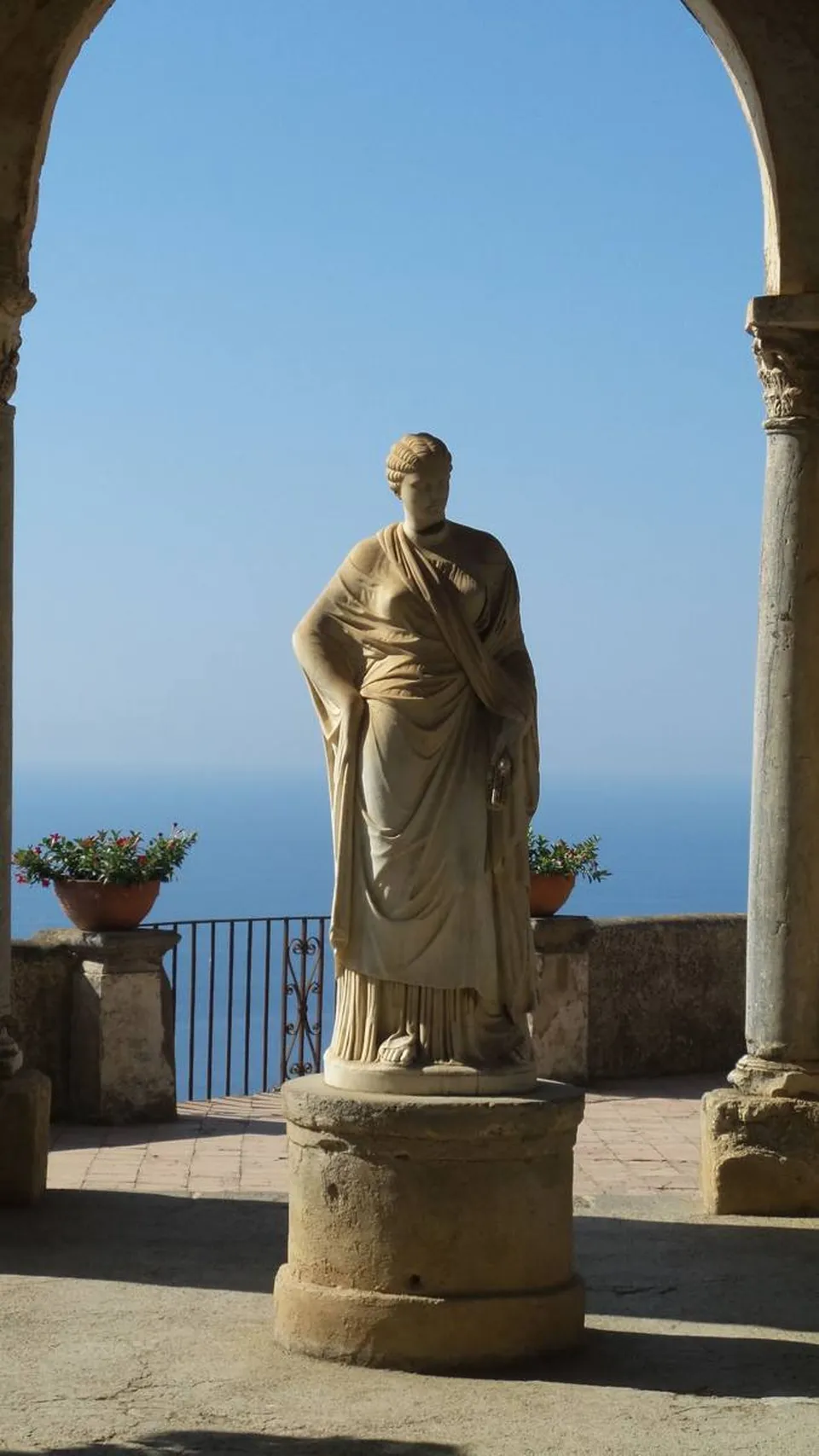
The villa was reimagined at the beginning of the 20th century by the Englishman Ernest Beckett, later Lord Grimthorpe, who designed the gardens by mixing classical elements, pergolas, and romantic views. Along the way you will encounter statues, hedges, and small shady corners: the right pace is that of a walk without a destination.
The Terrace of Infinity
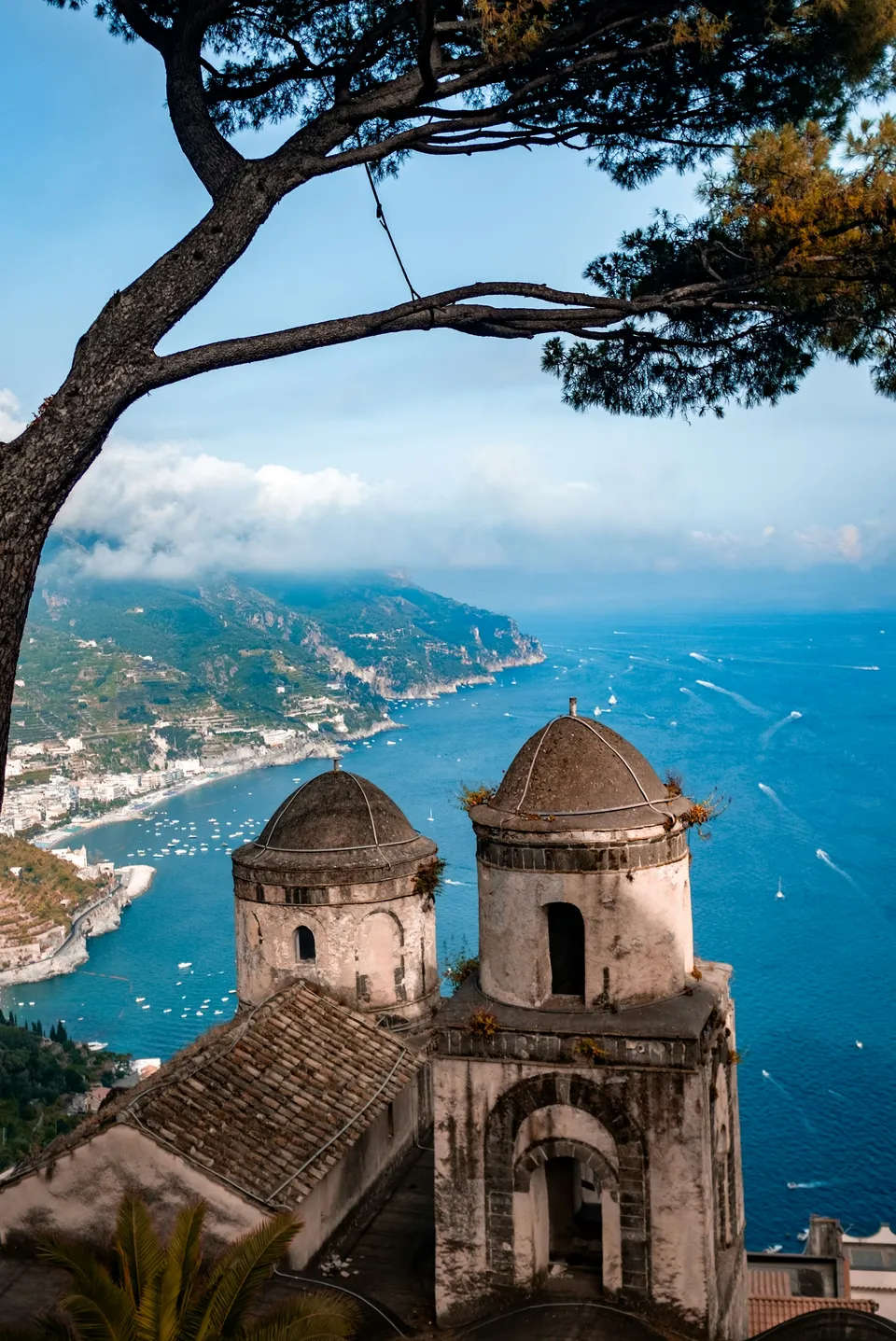
The Viale dell'Immenso ends at the Terrace of Infinity, a belvedere with a balustrade decorated with stone busts. From here the gaze runs over the Gulf of Salerno and the coast, with the sea far below.
It is a place where the light changes quickly: in the morning the outlines of the coast are sharper, while toward evening the tones warm up. Anyone who suffers from vertigo should remember that the parapet overlooks a notable drop, so it is best to enjoy the view calmly and without getting too close to the edge.
How to combine the two visits
The villas are a walk apart, in a town center that is pedestrian-only. A sensible order is to start with Villa Rufolo, near the square, and then continue toward Villa Cimbrone, taking the descent at a more leisurely pace.
If time is short, choose according to your taste: Villa Rufolo for history, architecture, and its link with music; Villa Cimbrone for gardens and open views. If you can, devote a slow visit to each, avoiding rushing through the circuit.
Practical tips
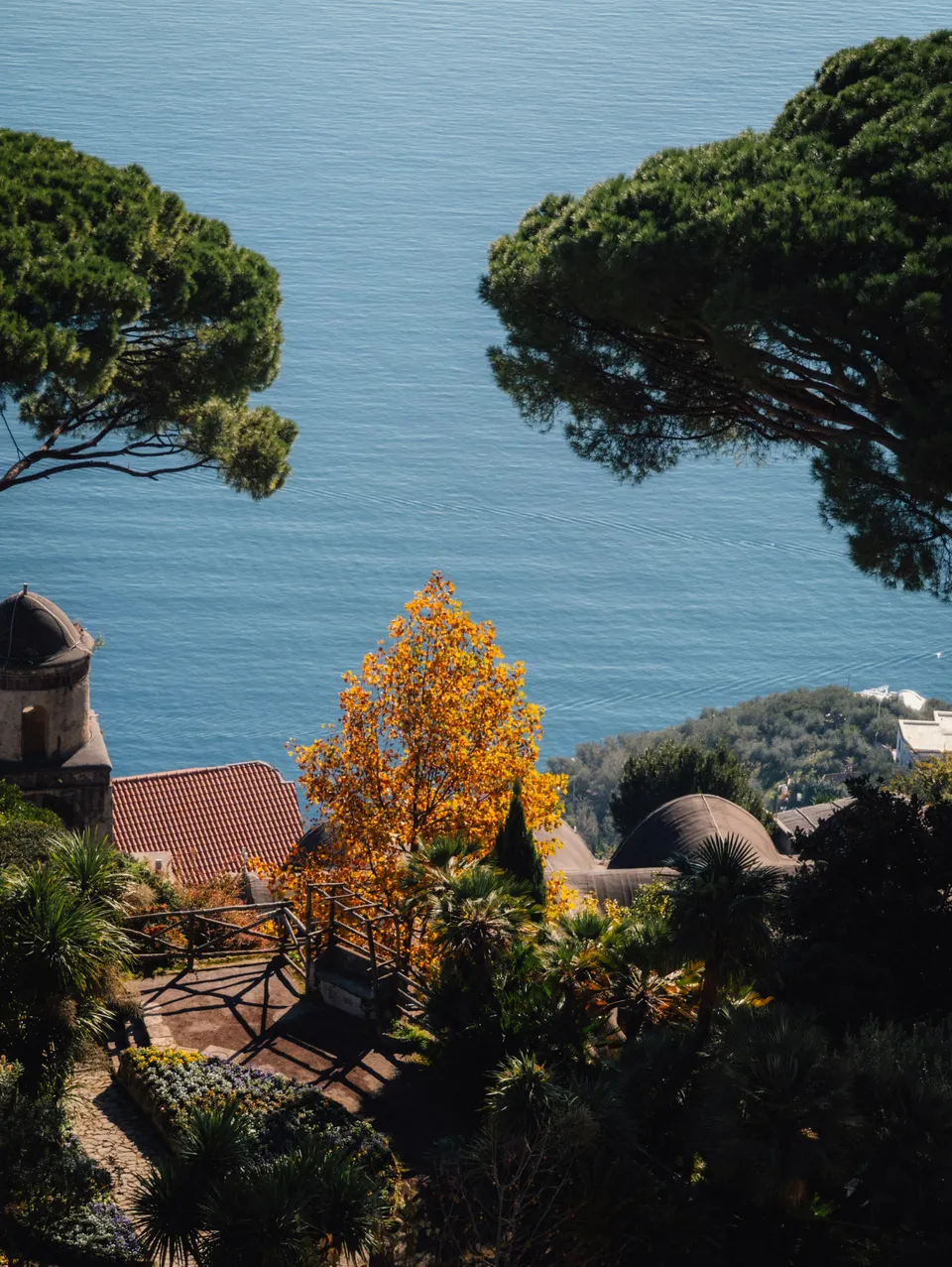
Opening hours, tickets, any closures, and access conditions change throughout the year: always check the official villa channels before you set out. The same applies to the Ravello Festival calendar, which may affect the organization of the spaces at Villa Rufolo.
- Wear comfortable shoes: the routes include steps, gravel, and slopes.
- Bring water and a hat in the warmer months.
- For photos, aim for the hours with side light, which is softer.
- Keep in mind that the weather can change quickly at this altitude.
Frequently asked questions
Which villa should I choose if I have little time?
Villa Rufolo is the best choice for those looking for history, architecture, and the link with Wagner and the Festival; Villa Cimbrone appeals to those who prefer gardens, a walk, and a belvedere. If you can, visit both: they complement each other.
Are the two villas reachable on foot from the center of Ravello?
Yes. The center is pedestrian-only, Villa Rufolo is next to the cathedral square, and Villa Cimbrone can be reached with a gentle uphill walk. For opening times and access conditions, consult the official sources.
Can you attend a concert at Villa Rufolo?
In summer the Ravello Festival offers concerts on the suspended stage in the villa’s belvedere. Dates, programs, and participation methods should be checked on the Festival’s official website.
Sources and useful links
Times, prices and services can change: always check with the official sources before you travel.
Updated: 2026-10-26