A village to explore on foot
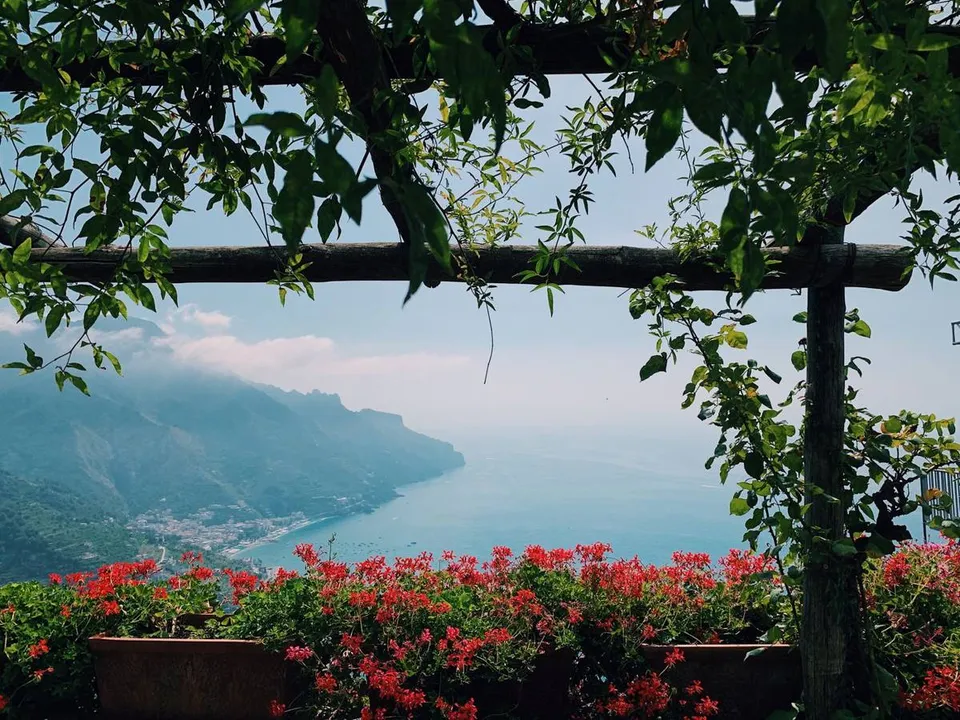
Ravello does not have a single monument to tick off a list: it is a collection of terraces, lanes and gardens best appreciated on foot. The center is pedestrian-only, so the pace is set by your steps, among stairways, arches and sudden views of the coast.
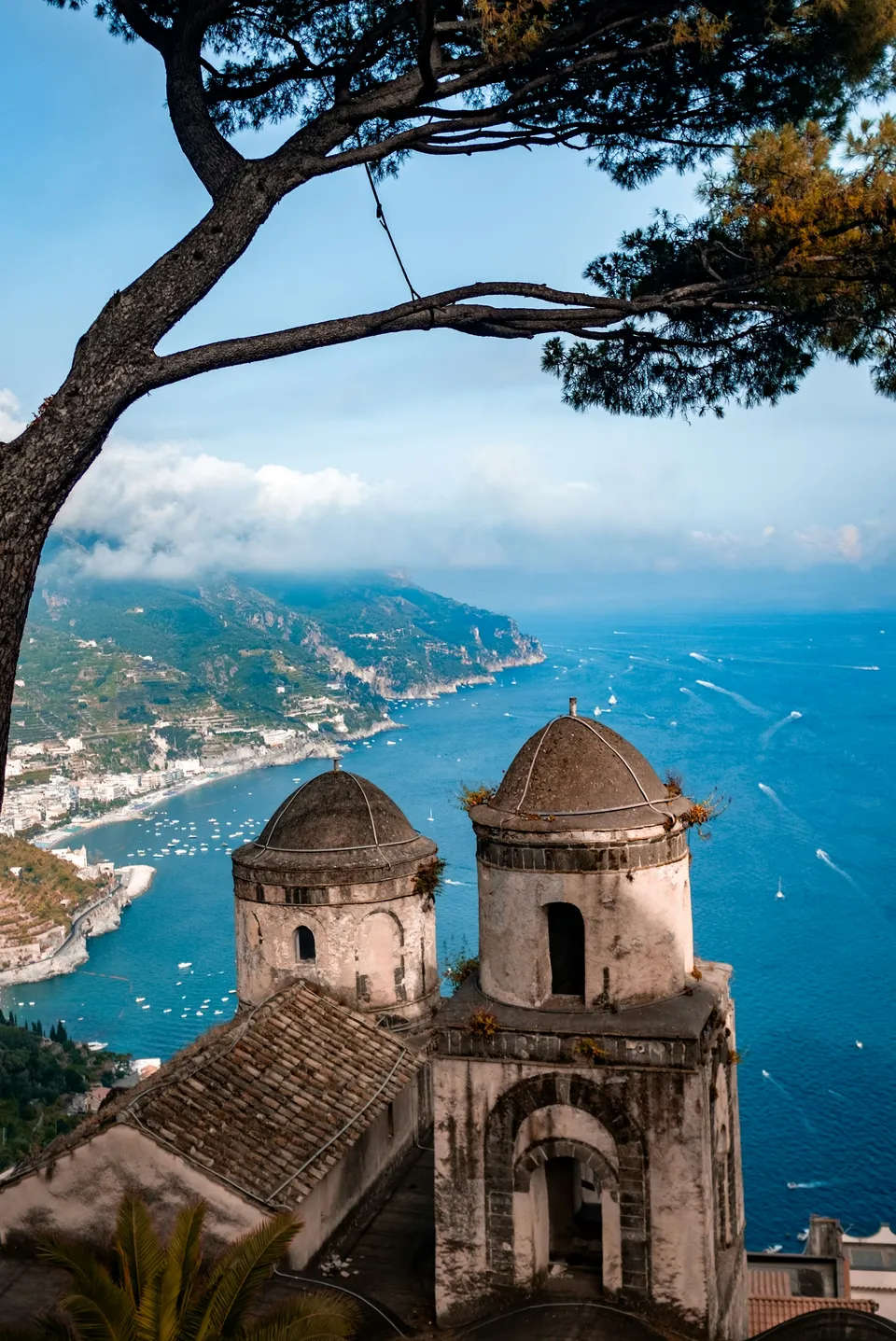
One thing should be said right away: there are no beaches here. The sea is much farther below, in Minori and Amalfi, and people come to Ravello for something else, namely the elevation, the silence and the landscape seen from above.
Villa Rufolo: towers, cloister and Wagner’s garden
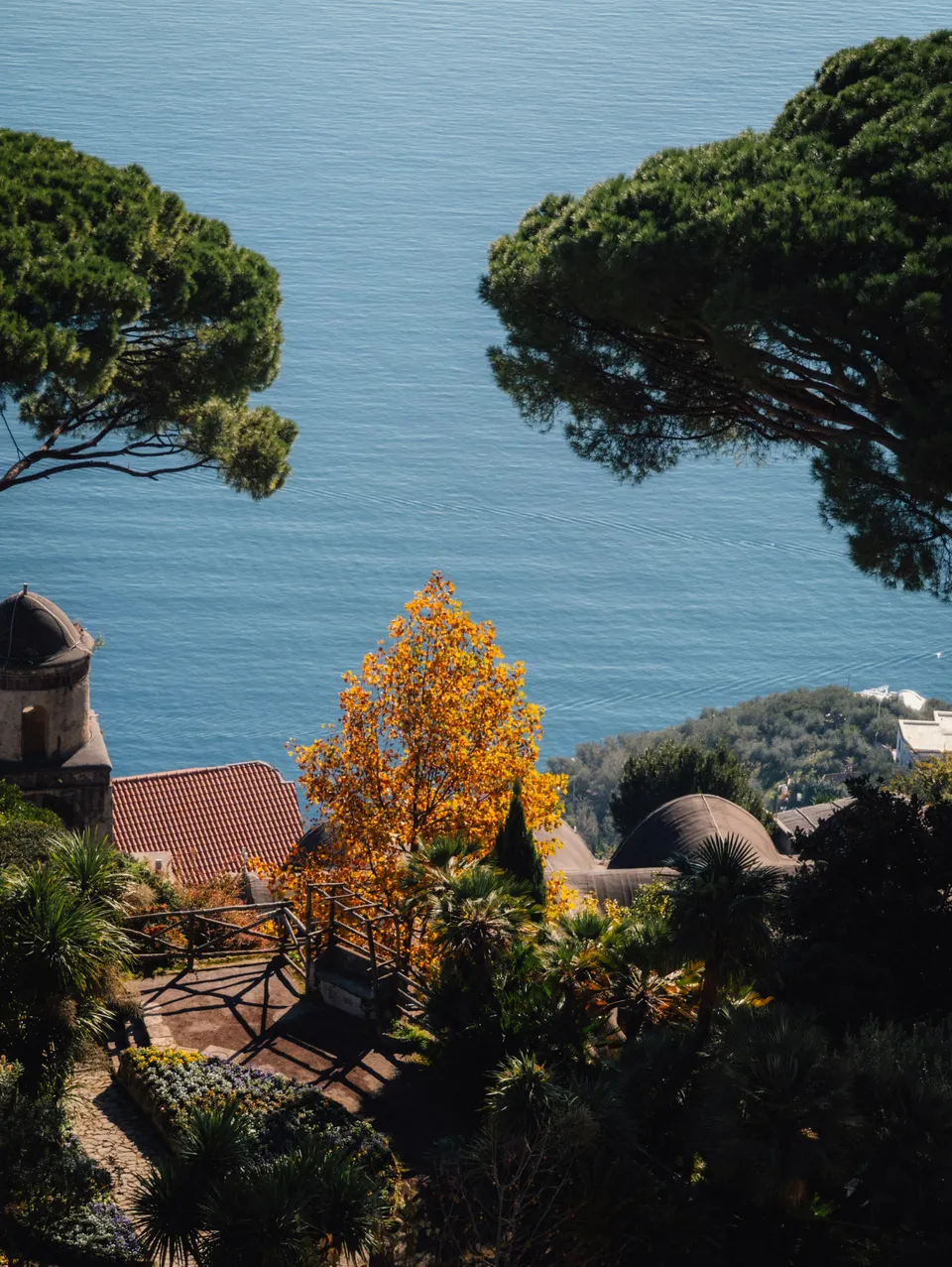
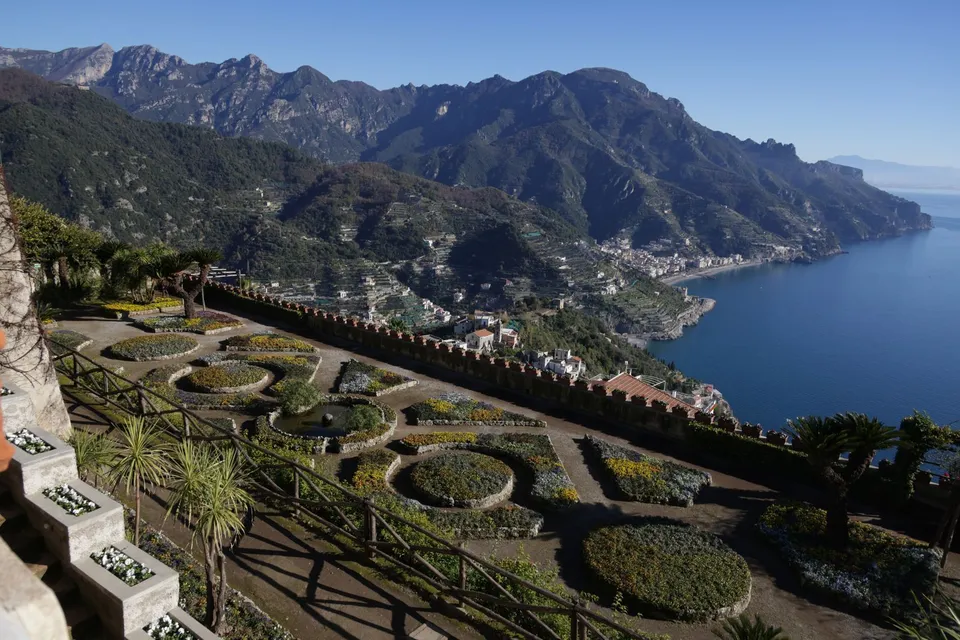
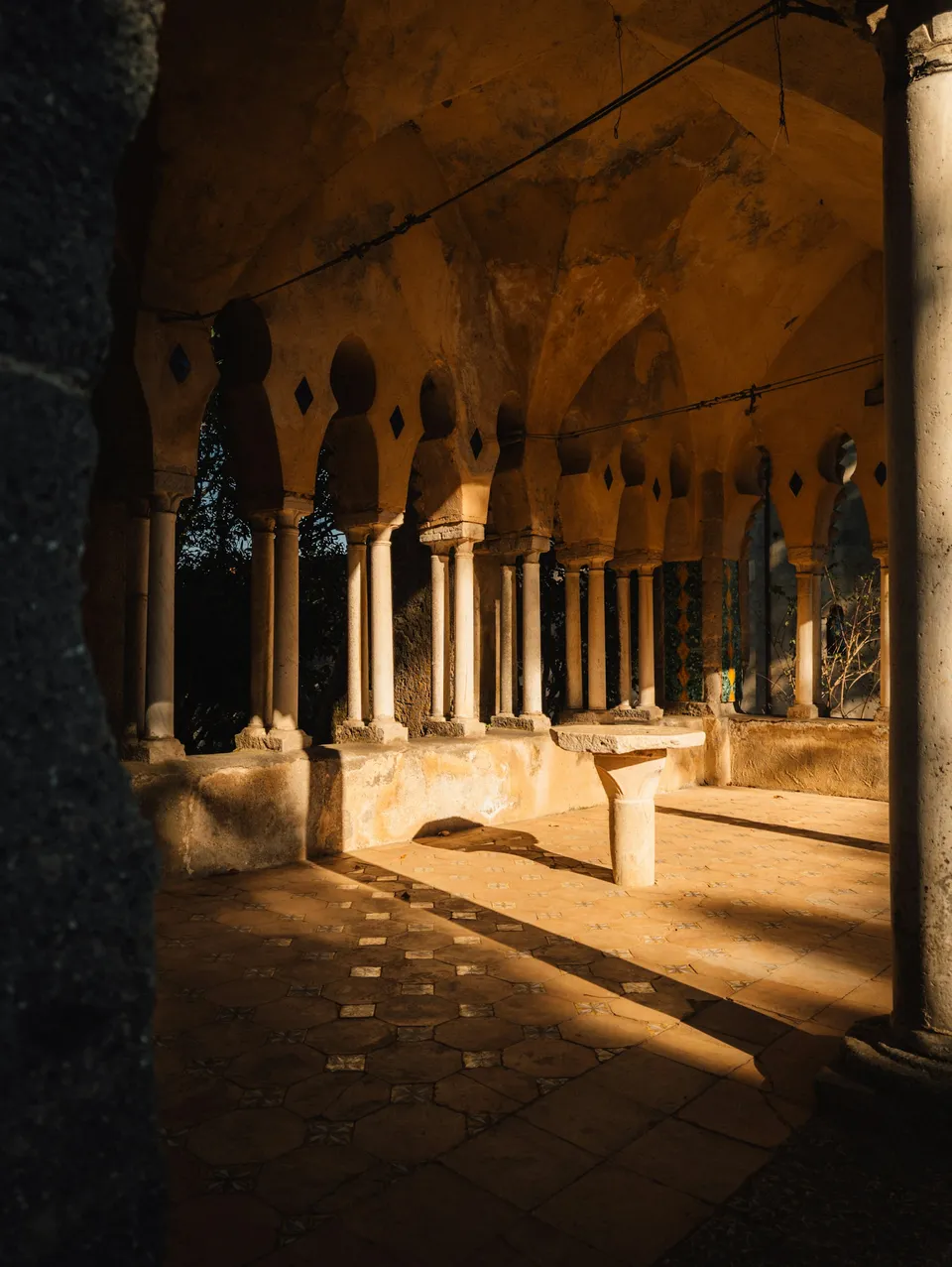
Villa Rufolo dates back to the 13th century and is the most recognizable image of Ravello. The complex preserves its medieval structure, with a tower, a cloister with Moorish-style arches and gardens descending in terraces toward the void.
In 1880 Richard Wagner stayed here and found inspiration for the garden of Klingsor in Parsifal. The connection with the composer is still strong: from the belvedere, where the suspended stage of the Ravello Festival is set up in summer, the view sweeps over the gulf with a depth that explains that enthusiasm well.
It is a visit made of details: blossoms, shadows under the porticoes, glimpses framed by the arches.
Villa Cimbrone: the Infinite at the end of the avenue
Villa Cimbrone has a different character, more intimate and scenic. It is reached on foot, leaving the heart of the village behind, and the inner route is designed as a gradual build-up.
The Avenue of the Immense
It is the long tree-lined path that crosses the garden and prepares you for the final view. You walk among greenery, pergolas and quiet corners, without the sea revealing itself right away.
The Terrace of Infinity
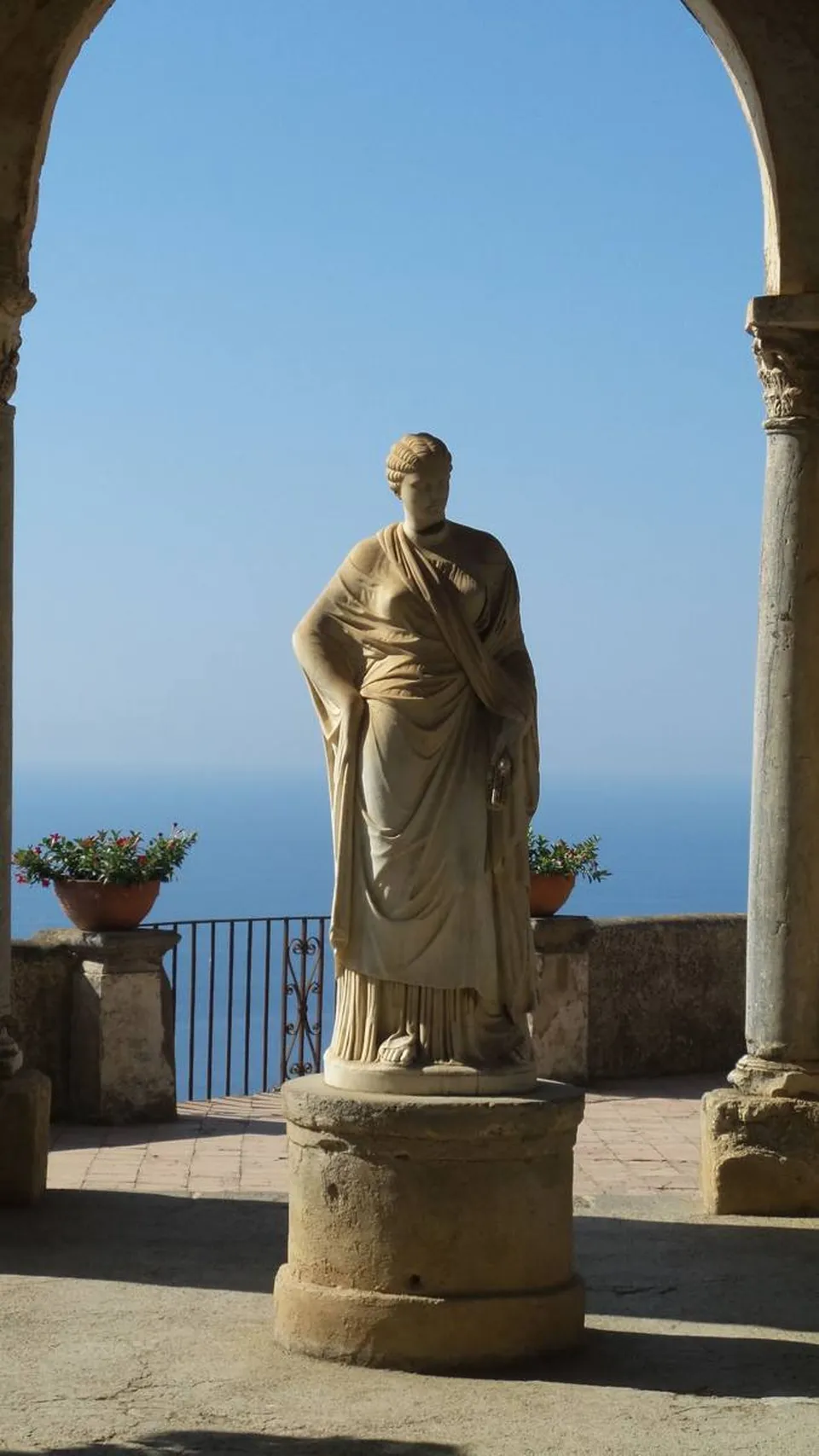
At the end of the avenue, the terrace opens onto a sheer drop above the coast, with the balustrade dotted with stone busts. The name is not exaggerated: sky and sea merge on the horizon. In the softer light of the day, the view changes, so it is worth stopping calmly.
The Duomo: bronze, mosaics and another Ravello
Overlooking the town square, the Duomo recalls how important Ravello was in the Middle Ages. The bronze portal by Barisano da Trani is one of the most precious pieces: panels with scenes and figures to observe closely, one by one.
Inside, the mosaic ambo is the other major highlight: colors, geometric patterns and figures that tell of the artistic richness of the period. Those who love details will find here the most intimate and quiet side of the village, a counterpoint to the open panoramas of the villas.
Niemeyer’s Auditorium
A few steps from the center, the Auditorium designed by Oscar Niemeyer introduces an unexpected note: white, modern curves that dialogue with the ancient stone of the village. It is an architecture that divides opinion and arouses curiosity, and for that very reason it deserves a look even if you are not attending a concert.
Its presence says something about Ravello: an ancient place that has never stopped engaging with the present.
In what order to visit them
A sensible route starts from the square, where the Duomo and the entrance to Villa Rufolo are located, and continues with a longer walk to Villa Cimbrone. The Auditorium fits in easily as an intermediate or final stop.
The practical advice is not to stack the visits too closely together: two gardens and a cathedral call for rested eyes. Opening hours, closing days and access methods change during the year and for events, so they should be checked on the official channels of the individual sites before visiting.
Go down or stay
Those looking for a swim need to go down: Minori and Amalfi are below, reachable by bus or by following the stepped paths that pass through Torello. Those who instead want Ravello for its villas and viewpoints would do well to leave time to stay, perhaps until late afternoon light, when the village empties and the terraces take on color.
Frequently asked questions
Is there a beach in Ravello?
No. Ravello is up high, at about 350 meters above sea level, and has no beaches. The sea is in Minori and Amalfi, connected by bus and stepped paths.
What are the main attractions in Ravello?
Villa Rufolo, with its garden-belvedere, Villa Cimbrone with the Terrace of Infinity, the Duomo with the bronze door by Barisano da Trani and the mosaic ambo, and the Auditorium designed by Oscar Niemeyer.
Can Ravello’s center be visited by car?
The center is pedestrian-only, so it is visited on foot. For access, transport and parking, it is best to consult the updated official information from the municipality and the service operators.
Sources and useful links
Times, prices and services can change: always check with the official sources before you travel.
Updated: 2026-10-26