Why Scala appeals to families
Those travelling with children on the Amalfi Coast are often looking for balance: seeing beautiful places without getting too tired and without ending up in the middle of crowded pavements. Scala responds well to this need. The village, considered by tradition to be the oldest on the Amalfi Coast, stands in an elevated position and has an intimate character, made up of alleys, views and silence.
Its strong point is not a list of attractions to tick off, but the atmosphere: here you can walk without rushing, stop to look at the woods, and let your children choose where to pause.
A village to explore at a slow pace
Like almost all the towns on the Amalfi Coast, Scala is made up of climbs, descents and steps. For this reason it is better to think in terms of rhythm rather than distance: a few stretches at a time, with frequent breaks.
With small children
With a stroller, the inner paths can be inconvenient because of stairways and slopes. A baby carrier or child backpack is usually more practical. Children who walk on their own will appreciate the variety of the routes, but holding their hand in the most exposed spots is a good rule.
With older children
Older children can experience the day as a small exploration: finding the points from which Ravello can be seen on the opposite side of the valley, following the lanes from one cluster to another, and recognizing the trees.
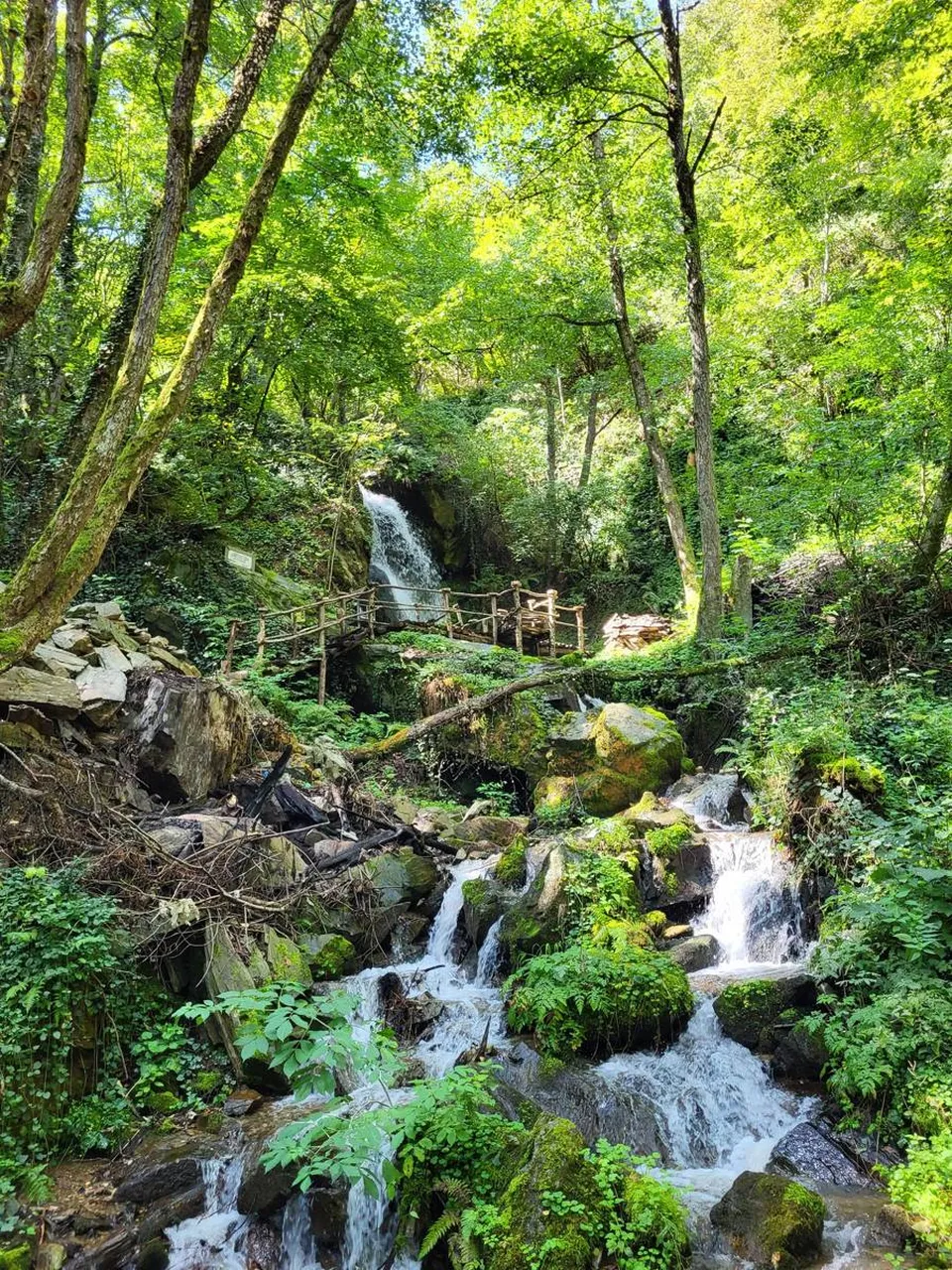
Chestnut woods and terraced slopes: nature close to the village
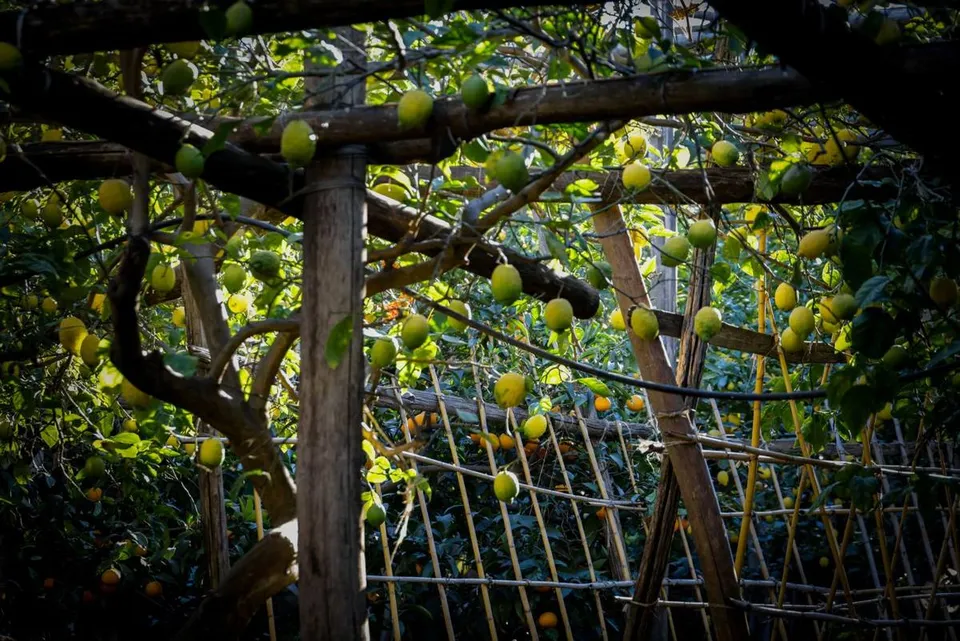
Around Scala, the landscape alternates chestnut woods and terraced slopes, the agricultural pattern that has shaped the hillsides of the Amalfi Coast for centuries. For children, it is an open-air classroom.
You can play at identifying the shapes of the leaves, observing the dry-stone walls that support the terraces, and listening to the sounds of the woods, so different from those of the sea. In autumn, chestnut trees become a natural storytelling theme: the spiky husks, the fruits, the ancient link between these mountains and the forest.
One simple piece of advice: wear closed shoes with a good sole, even for short walks, because the ground and steps may be uneven or slippery after rain.
The hamlets as small stops
The territory of Scala is spread across scattered hamlets: Minuta, Campidoglio, Santa Caterina, San Pietro and Pontone. This dispersed geography is an asset for families, because it allows the day to be broken into short stages, each with its own small goal.
At Minuta, for example, there is the church of the Annunziata: an easy stop to turn into a moment of observation, perhaps with a little detail hunt. Avoid overly ambitious plans: choose one or two and leave room for the unexpected. The details of each hamlet are still worth a separate deeper look.
Telling children about Scala
An ancient village becomes interesting if it has a story to hear. In Scala there are at least two, easy to tailor.
The first concerns the Duomo of San Lorenzo, which has a crypt: for a child, going down into an underground, cool and quiet space is always especially fascinating. It is better to explain beforehand, in a low voice, that it is a place of worship and that you enter respectfully.
The second is the story of the blessed Gerardo Sasso, who, according to tradition, was born in Scala and founded the Order of the Knights of Malta. Telling it as a legend of knights and care for pilgrims is a simple way to give the town's past a face.
The Valle delle Ferriere: with caution and up-to-date information
From the area of Scala you can reach the upper part of the Valle delle Ferriere, a protected area with regulated access. With children it is a fascinating environment, but one that requires preparation.
Before setting out, check official sources, such as the managing bodies of the protected area and the Comune, to find out the access rules and the condition of the trails, which may change. Then honestly assess your children's abilities: if you have doubts, settle for a short stretch and give up without regret. In a protected area, the usual rules apply: do not leave litter, do not pick plants, and stay on the permitted paths.
Practical tips for planning the day
Scala can be reached by bus from Amalfi. Timetables and frequencies vary throughout the year, so check them on the official channels of the transport companies. The mountain roads have many bends: anyone prone to motion sickness should travel on a light stomach.
For the day, bring with you:
- water and a snack, to be enjoyed slowly;
- a sunhat and sunscreen in summer, a light jacket in the mid-seasons;
- comfortable shoes for everyone;
- a small time buffer for the return, especially if you depend on the bus.
The beauty of Scala, for families, is precisely this: there is nothing to chase.
Frequently asked questions
Is Scala suitable for small children?
Yes, if you accept a slow pace. The village is peaceful, but there are stairs and slopes: for little ones, a baby carrier is often more practical than a stroller.
Can you visit the Valle delle Ferriere with children?
It depends on the children's age and fitness level. Access to the upper part from the area of Scala is regulated, so always check the rules and trail conditions with official sources.
How do you get to Scala from Amalfi with the family?
There is a bus connection from Amalfi. Check timetables and departures on the official channels before leaving, because they may vary.
Sources and useful links
Times, prices and services can change: always check with the official sources before you travel.
Updated: 2026-10-26