Another Amalfi Coast, a stone’s throw from the village
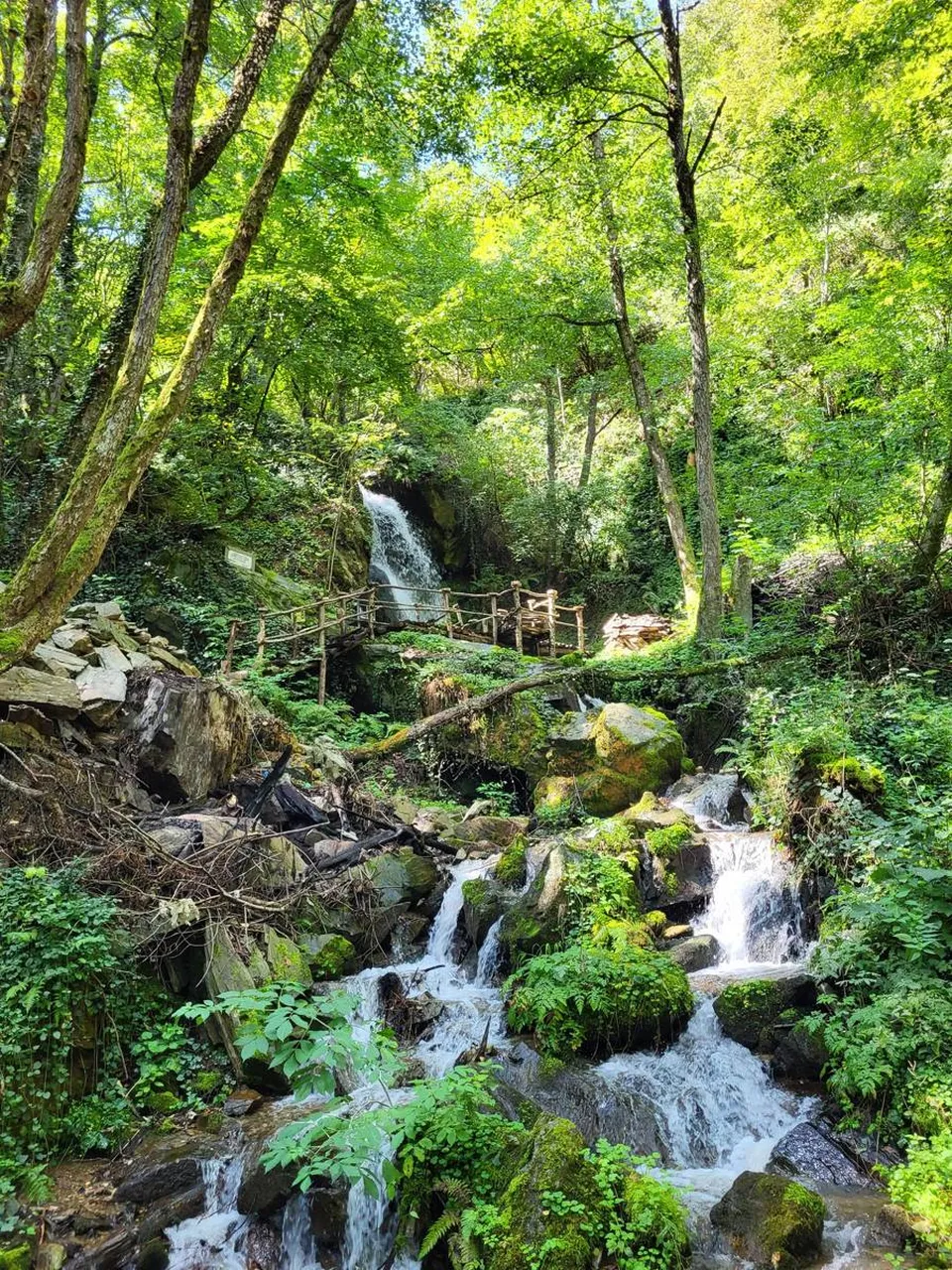
Anyone who thinks of the Amalfi Coast imagines lemons, cliffs and sea. Valle delle Ferriere shows its opposite face: a narrow, deep gorge, carved into the massif of the Lattari Mountains, where the light arrives filtered through the tree canopies and the air smells of wet earth.
From the area of Scala, you reach the upper part of the valley. The transition from terraced slopes to chestnut woods is gradual, and that alone is enough to make it clear that you are entering a different environment.
Why it is called "delle Ferriere"
The name recalls the old ferriere, workshops that processed iron by harnessing the power of the stream’s water. Today, traces of stone buildings remain from that activity, now swallowed by vegetation.
It is a fascinating stretch of the valley: nature has reclaimed the structures built by humans, and the ruins seem part of the landscape.
The microclimate and the fern that came from afar
The constant humidity and the gorge’s shade create a cool microclimate, very different from that of the coast. Here lives Woodwardia radicans, a large fern considered a relic of eras when the climate was warmer and wetter, and one of the reasons the valley is protected.
Alongside the ferns, the valley is home to mosses, liverworts and shade-loving plants that cover rocks and dripping walls. The wettest areas have an almost tropical feel.
Woods, water and silent life
As you go uphill, woodland prevails, with chestnut trees and other broadleaf species that change color in autumn. The dominant sound is water flowing among the boulders, sometimes in small cascades.
The humid environment is also suitable for amphibians, which usually only make themselves known indirectly. Those who walk attentively notice more: the green of the leaves, the pattern of the ferns, the dark, wet rock. Better to move slowly and quietly.
Regulated access: what it means
The upper part of the valley is a protected area and access is regulated. In practical terms, this is not a place for free wandering at any time: there may be restrictions, permits or closures linked to environmental protection and safety.
Before setting out, always check the current conditions with the Municipality of Scala and the bodies that manage the protected area. The condition of the trails can also change after heavy rain or landslides, so trust only up-to-date information.
How to prepare for a day in the gorge
The ground can be slippery and the valley climate is cooler and more humid than on the coast. A few precautions help:
- hiking boots with good soles and, if needed, a dry change of clothes
- a light waterproof layer, even when the sky looks clear
- water and some provisions, because there are no refreshment points along the route
- don’t let your phone run out: in the gorge the signal may be absent, so it is better to have an offline map
After heavy rain, it is best to postpone: streams swell quickly and the slopes become unstable.
Visiting without leaving a trace
Such a delicate environment is preserved through simple actions. Stay on the allowed paths, do not pick plants, mosses or stones, do not disturb the animals, and take your rubbish back down to the valley, including organic waste.
Valle delle Ferriere is not a place to simply tick off a list: it is a place to listen to. Those who visit it respectfully, following the rules, leave with the image of a more hidden and cooler Amalfi Coast, one many do not expect.
Frequently asked questions
Can Valle delle Ferriere from Scala be visited freely?
The upper part of the valley is a protected area with regulated access. Before setting out, check the current conditions with the Municipality of Scala and the area management bodies.
What makes Valle delle Ferriere special from a naturalistic point of view?
The cool, humid microclimate of the gorge supports rare vegetation, including the fern Woodwardia radicans, along with woods, running water and remains of the old ferriere.
When is it best to avoid the hike?
After heavy rain or in the event of weather alerts, when the trails can be slippery or affected by landslides and the stream can rise rapidly. Always consult official sources.
Sources and useful links
Times, prices and services can change: always check with the official sources before you travel.
Updated: 2026-10-26