A town without a center
Furore cannot be summed up by a square. There is no heart where the roads converge, nor a single core around which the houses cluster: the homes are spread along the slope, at different elevations, among terraces, stairways and bends in the state road.
This is where the nickname “the town that doesn’t exist” comes from, which tells more about a particular form of settlement than about an absence. The advice is to accept the place’s rule: in Furore you do not look for the center, you build an itinerary, stopping wherever the landscape and the wall art suggest.
The fjord seen from the bridge
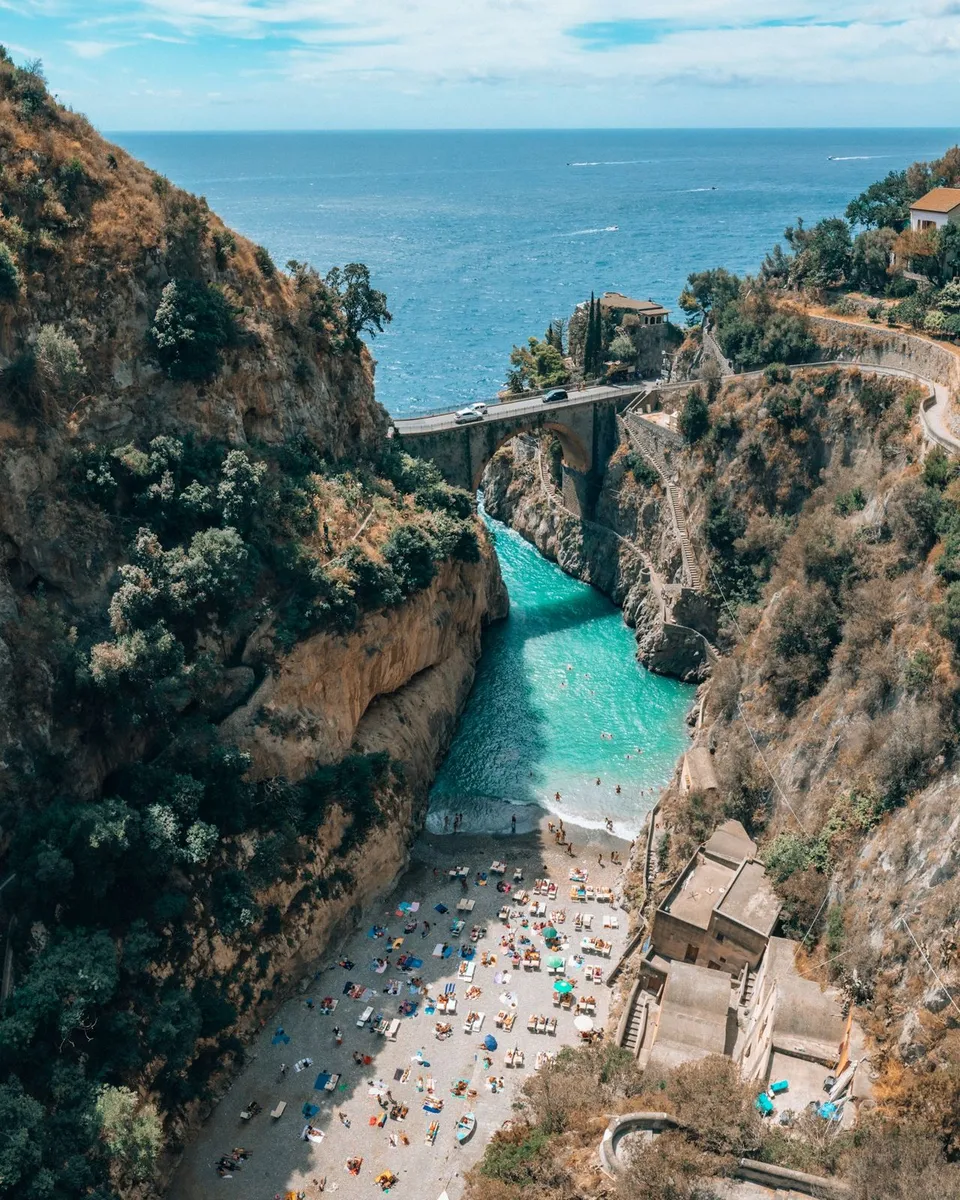
Furore’s most recognizable image is the fjord: a deep, narrow gorge that cuts into the mountain and reaches down to the sea. The state road crosses it on a high bridge, from which you can appreciate the proportions between the vertical walls and the small body of water below.
It is a view worth taking in calmly and carefully, remembering that the state road is narrow and very busy. Those who want to understand how the descent to the bottom of the gorge works and what the access rules are will find more detailed guidance in the article dedicated to the fjord.
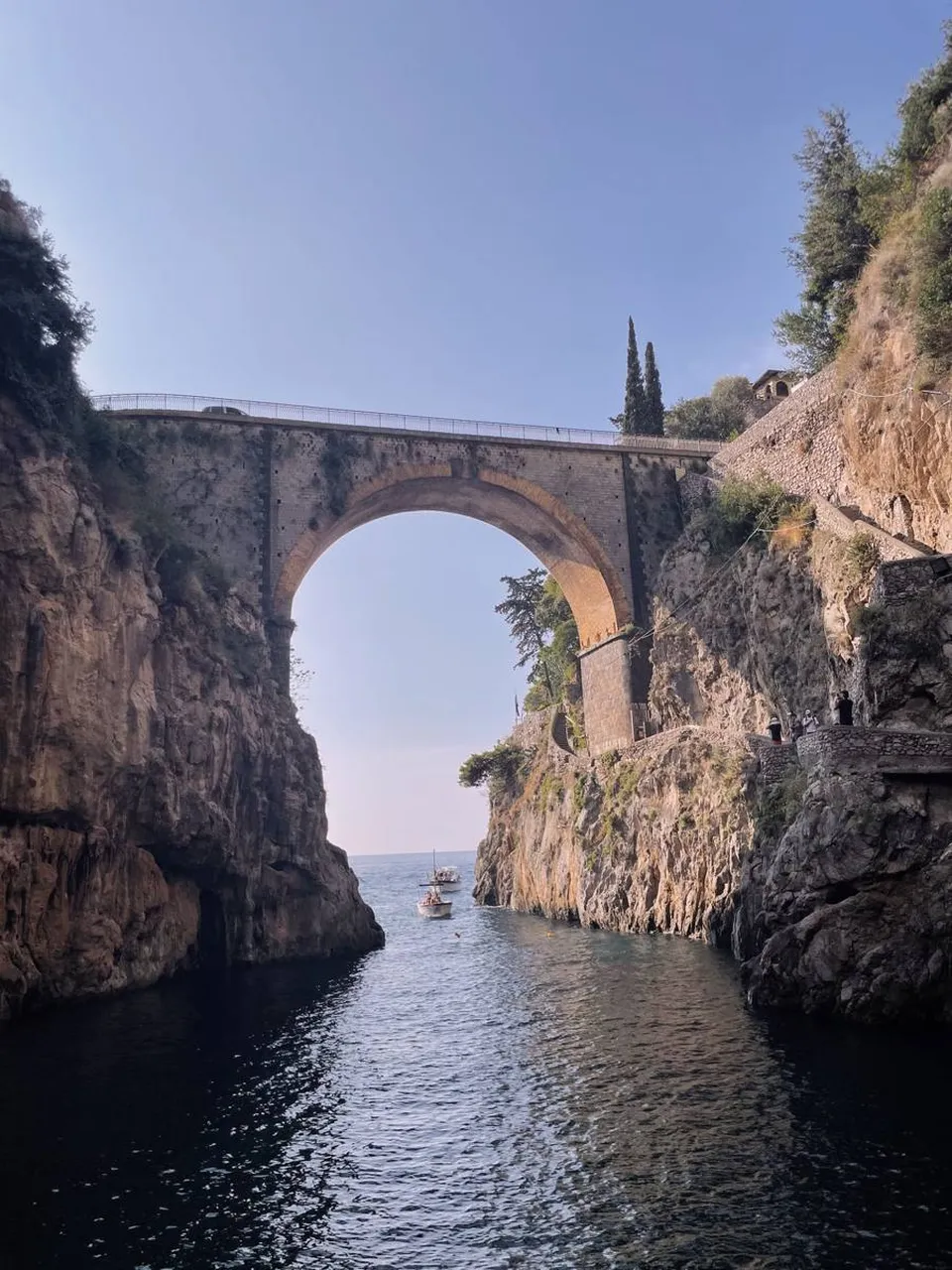
The marina and the old fishermen’s houses
At the bottom of the gorge, a small marina opens up, with the old fishermen’s houses leaning against the rock. They are simple buildings, created for life by the sea in one of the few places where the vertical coast leaves a passage to the water.
Access to the fjord beach may be restricted for safety reasons, linked to the shape of the gorge and the conditions at the time. Before planning your visit, it is wise to check the Municipality’s information and the signs on site, and to let it go without regrets if passage is not allowed: the view from above is still impressive.
The upper village and the walls that speak
As you climb toward the upper village, Furore changes character. Walls, stairs and corners of houses become a backdrop for murals and works of art, turning the lanes into an open-air gallery.
The works are encountered while walking, with no fixed order, and the best way to appreciate them is to move slowly, also noticing the details: a corner of a wall, a change in level, a staircase. Here art is not enclosed in a museum but blended with the daily life of the houses, and that is what gives the village its recognizable identity.
Terraced vineyards overlooking the sea
Furore’s slope has been worked into terraces for centuries, supported by stone walls, and many of these bands host vineyards. From this agricultural landscape comes the wine of the Costa d'Amalfi Furore denomination.
Even without getting into tasting, the rows of vines are an attraction in their own right: they show how much work is needed to cultivate such a steep territory and how people have shaped the mountain almost down to the sea. For a closer look at flavors and production, we refer you to the article dedicated to the wine.
Walking between the village, the fjord and Agerola
Furore is also a place to explore on foot. Some trails connect the upper village to the fjord, while others lead toward Agerola, inland, offering a change in elevation and perspective compared with the coastline.
Before you set off
The condition of the trails can change because of landslides, maintenance or weather conditions: it is best to check with official local sources. Proper shoes, water and extra time for the return are needed, because the elevation changes on these stairways are felt even when the distances seem short.
Near Conca dei Marini and the Emerald Grotto
Furore is very close to Conca dei Marini and the Emerald Grotto, and the three places work well when read together. The fjord, with its gorge, and the grotto, with its hidden sea, are two different ways in which rock meets water along this stretch of coast.
Those with more time can therefore plan a short extension to the nearby village, without turning the day into a rush from one stop to the next. Access to the grotto and connections should be checked on official sources.
How to plan your visit
To see Furore at its best, the strategy is simple: start from a panoramic viewpoint over the fjord, then head up to the upper village for the murals, allow time for a stretch of trail or a look at the vineyards, and leave room for the unexpected.
Wear comfortable shoes, keep in mind that there are many stairs, and check access, transport and fjord conditions in advance. In a town that has no center, the time spent walking is an integral part of the experience.
Frequently asked questions
Why is Furore called the town that doesn’t exist?
Because it does not have a real center: the houses are scattered along the slope, at different elevations, without a square or a main core around which the life of the town is concentrated.
Can you always go down to the fjord beach?
No. Access to the beach may be restricted for safety reasons. It is best to check the Municipality’s information and the signs on site before planning your visit.
What is there to see in Furore besides the fjord?
The upper village with its murals and wall art, the terraced vineyards from which Costa d'Amalfi Furore wine comes, and the trails that connect the town to the fjord and to Agerola.
Sources and useful links
Times, prices and services can change: always check with the official sources before you travel.
Updated: 2026-10-26