A scattered town, a shared table
Furore is called the town that does not exist: the houses are scattered along the slope, without a square to serve as its heart. The same is true of its food and wine culture, which is not concentrated in one street but spread among cultivated terraces, family wineries, and small inhabited clusters.
For this reason, it is worth arriving with some curiosity and without haste. Furore’s flavor is grasped by walking, by looking at how the land is arranged, and by letting yourself be guided by what you see: pergolas, dry-stone walls, kitchen gardens, glimpses of blue.
Costa d'Amalfi Furore: a designation, a place
Wine is the most recognizable feature of the local table. The name of the town appears on the label in the Costa d'Amalfi Furore designation, a subzone of the broader controlled designation of origin of the coast. The name declares the origin: the grapes grow here, between the sea and the slopes of the Lattari Mountains.
Production is small-scale, tied to limited surfaces and largely manual work. Do not expect large volumes: expect wines that tell the story of a micro-territory.
Terraced vineyards: effort that becomes landscape
Furore’s slope is steep and the vine needs level space. For centuries, the answer has been terracing: dry-stone walls support narrow strips of land, sometimes little wider than a single row. On these bands, vines often grow under pergolas, with the bunches hanging above the ground.
Working like this means doing almost everything by hand, with stair-like paths and little room for machines. It is a viticulture that asks for time, and it is also the reason these vineyards are as photogenic as they are fragile. Observing them respectfully, without entering the fields, is the simplest gesture to help protect them.
What to expect in the glass
The traditional grapes of the Coast are the reference point: among the whites, Falanghina and Biancolella are especially common; among the reds, Piedirosso and Aglianico. Style depends on the producer and the vintage, so the best advice is to ask directly at the winery how each wine was made.
In general, coastal whites are appreciated for freshness and salinity, qualities that pair well with the marine climate. The reds, fewer in number, complete the picture for those seeking something more structured.
At the table: sea, garden, and home cooking
Here wine accompanies a simple cuisine faithful to the ingredients of the coast. Blue fish, vegetables from the terraced gardens, tomatoes, aromatic herbs, and fragrant Amalfi lemons return in many traditional preparations.
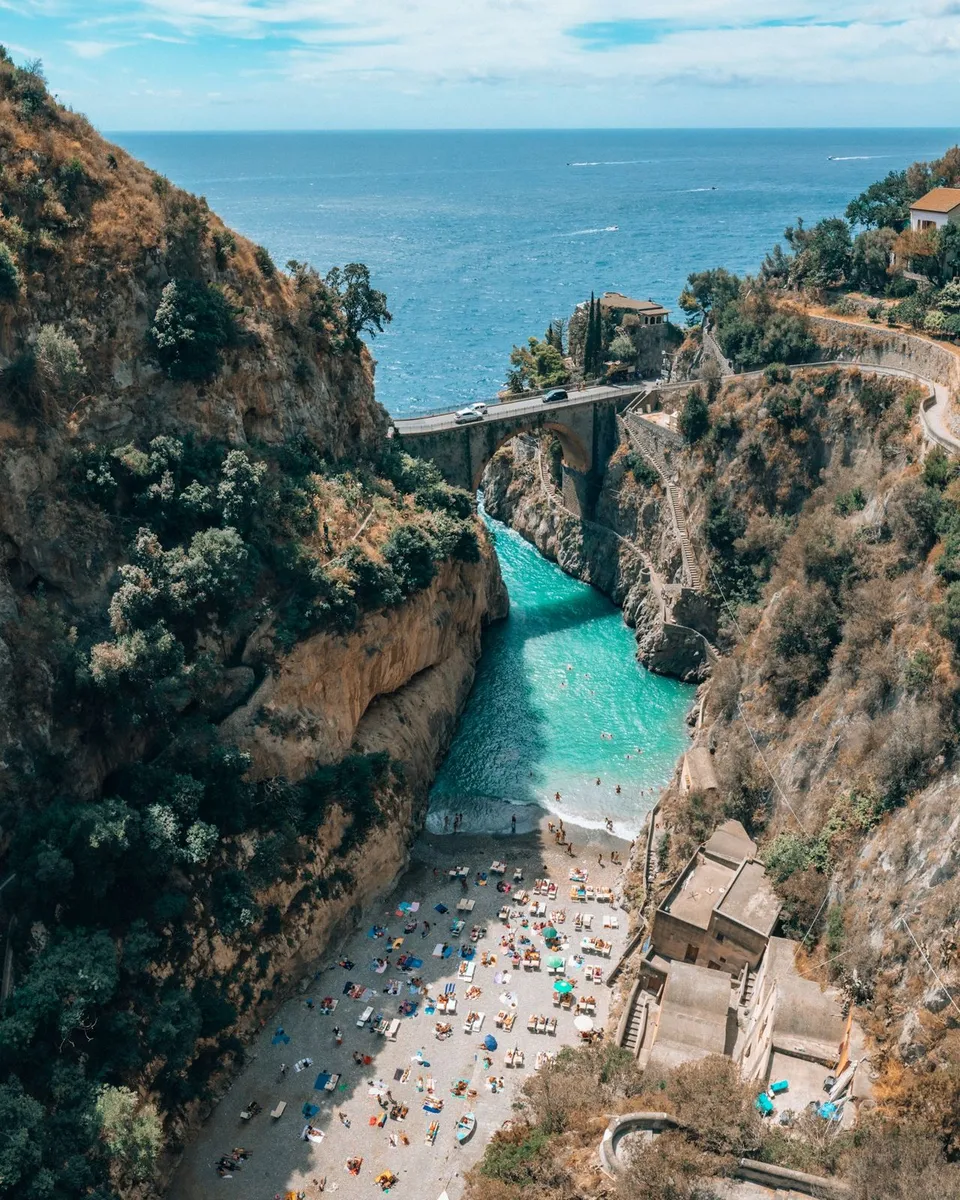
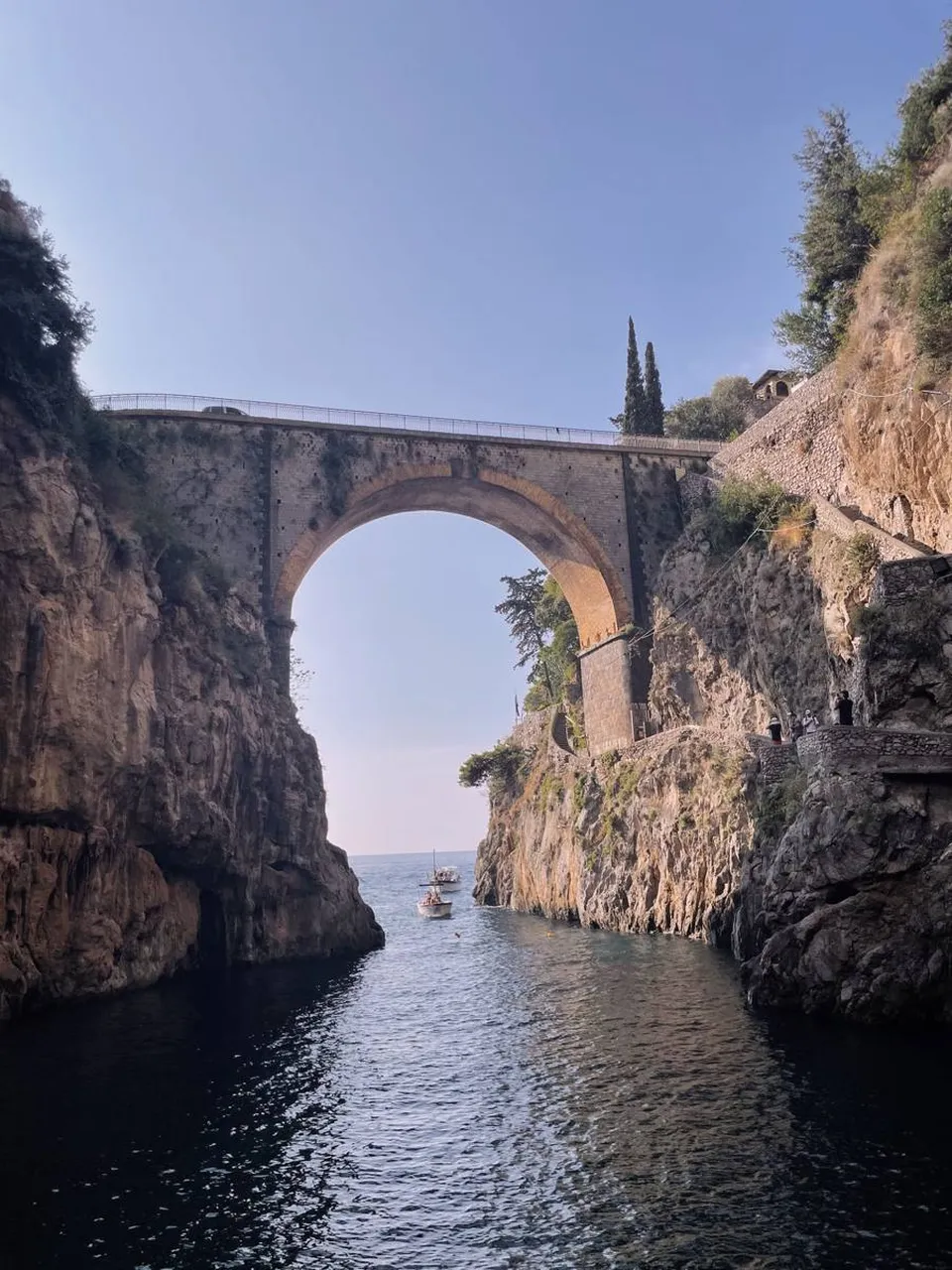
The small marina of the fjord recalls the ancient life of fishermen: from there comes the memory of a humble but flavorful seafood cuisine. If access to the fjord is restricted for safety, remember that the link between sea and table can be appreciated just as well from afar, from the bridge or from the paths of the upper village.
From the coast to the plateau: Agerola’s touch
The paths connect the upper village to Agerola, and the flavor changes with altitude. The plateau is known for its dairy tradition, with fresh dairy products and cheeses that provide a counterpoint to marine flavors.
Pairing a coastal white with a mountain cheese in a single day is a practical way to read the territory from top to bottom, without having to go far: Conca dei Marini and the Emerald Grotto are very close, but here what matters most is the passage between the two worlds.
Practical tips for a mindful tasting
Visits to wineries and tastings depend on producer availability and the season: it is best to contact them in advance and check conditions directly with them. Harvest time, in late summer and early autumn, is when vineyard work is most intense and hospitality may change.
Some tips
- Choose comfortable shoes: there is a lot of walking on terraces and stairs.
- If you drink, do not drive along the coastal road, which is narrow and winding.
- For trails, transport, and access, always consult updated official sources.
- Respect the fields: they are working places, not open spaces.
Frequently asked questions
What is the Costa d'Amalfi Furore designation?
It is a subzone of the Costa d'Amalfi designation that identifies wines made from grapes grown in the territory of Furore. For details on the rules, it is advisable to consult official sources or ask the producers directly.
Can you visit the vineyards of Furore?
Many vineyards are private working terraces. They can be admired from the paths and roads, while to visit a winery it is best to arrange in advance with the producer, checking availability and conditions.
When is the best time to go for wine and local flavors?
From spring to autumn, the agricultural landscape is easiest to read. Harvest time, between late summer and early autumn, is a striking but demanding period for producers: it is best to plan ahead.
Sources and useful links
Times, prices and services can change: always check with the official sources before you travel.
Updated: 2026-10-26