Piazza Tasso, the starting point
Every visit to Sorrento almost inevitably begins in Piazza Tasso, the center of city life. It is the place where residents and travelers cross paths, and where the alleys of the historic center begin to branch off in several directions.
The square is dedicated to Torquato Tasso, the poet born in Sorrento: arriving here with that in mind helps you read the city not only as a holiday destination, but as a place with a clear cultural identity. Stop for a few minutes to watch the movement before heading into the side streets.
Vallone dei Mulini, a valley inside the city
Just a few steps from the square, the ground drops away and an unexpected scene appears: the Vallone dei Mulini, a narrow gorge where vegetation has wrapped around the remains of an ancient mill. The atmosphere is that of a corner left outside time, in sharp contrast with the liveliness of the center.
It is a short stop, but one of the most evocative ways to understand how Sorrento grew around a landscape shaped by changes in elevation, rock and greenery. The best viewpoint is from above, calmly and without rushing.
The historic center and Sedil Dominova
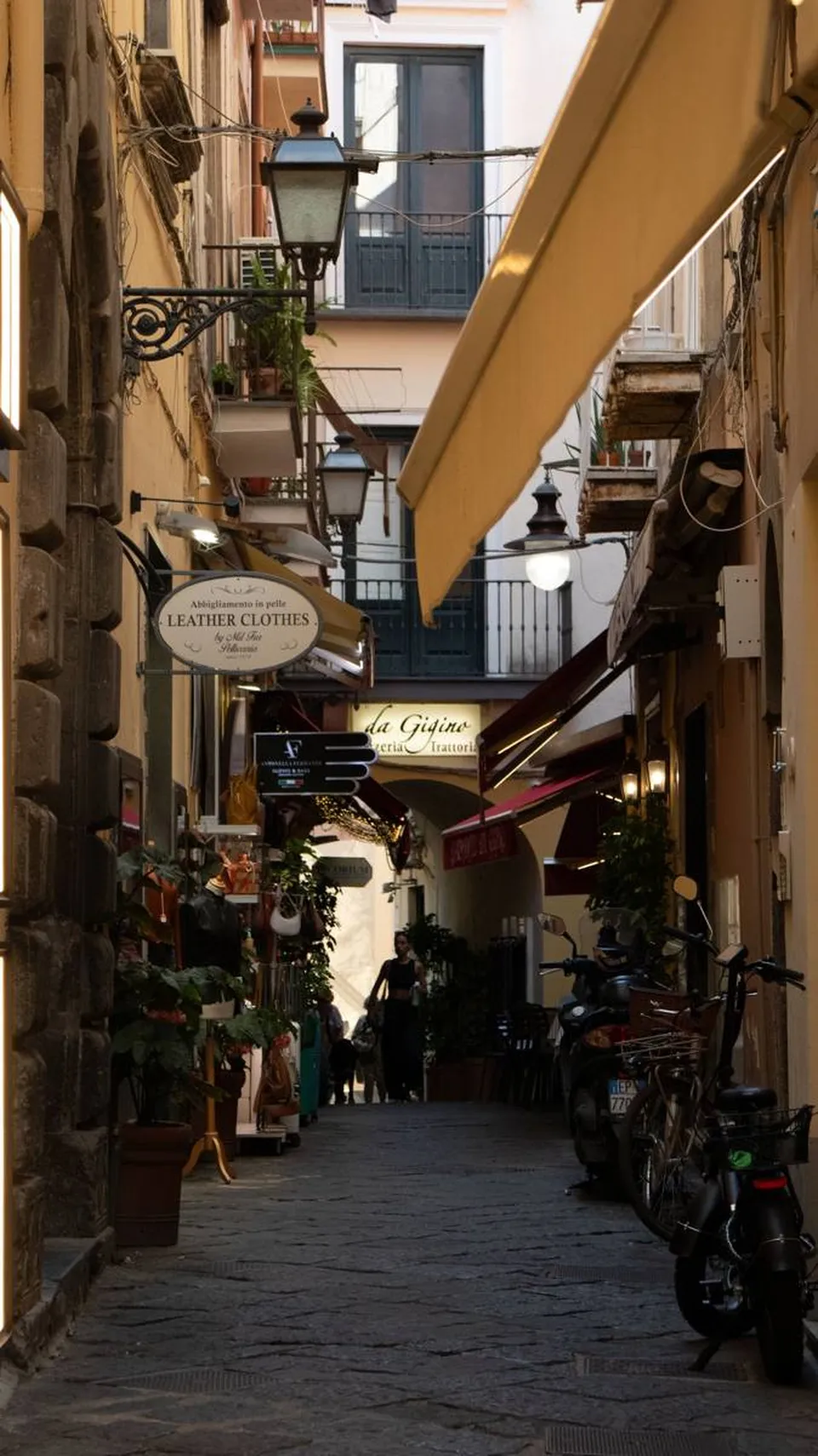
The old heart of the city is explored without a rigid map: narrow streets, shops, gateways and sudden glimpses are part of the experience. Among the most significant buildings is Sedil Dominova, an ancient noble seat, today recognizable by its open-loggia appearance and decorated dome.
This type of building tells the story of how the city nobility once governed public life. For those who love civil architecture, it is a small lesson in local history, worth observing carefully even while just passing by.
Chiostro di San Francesco
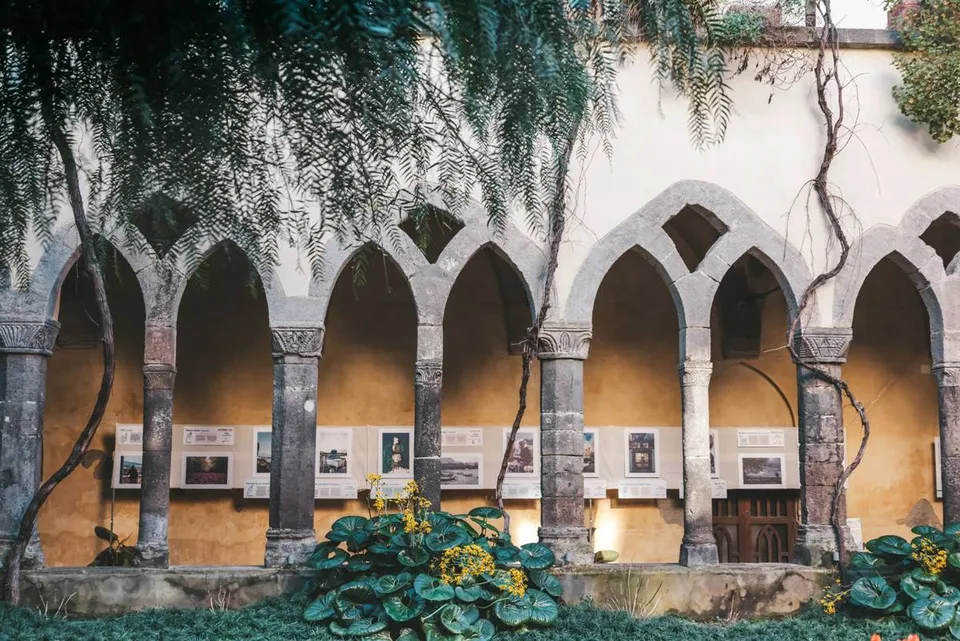
One of the most intimate corners of Sorrento is the Chiostro di San Francesco. Here the pace slows: the arcades, the inner garden and the silence, which contrasts with the nearby streets, create an atmosphere of great harmony.
The cloister is often used for exhibitions and cultural events, so its atmosphere may vary depending on the time of year. Before going, it is advisable to consult the official channels of the Comune or cultural institutions to check access and programming.
Villa Comunale and the terrace over the gulf
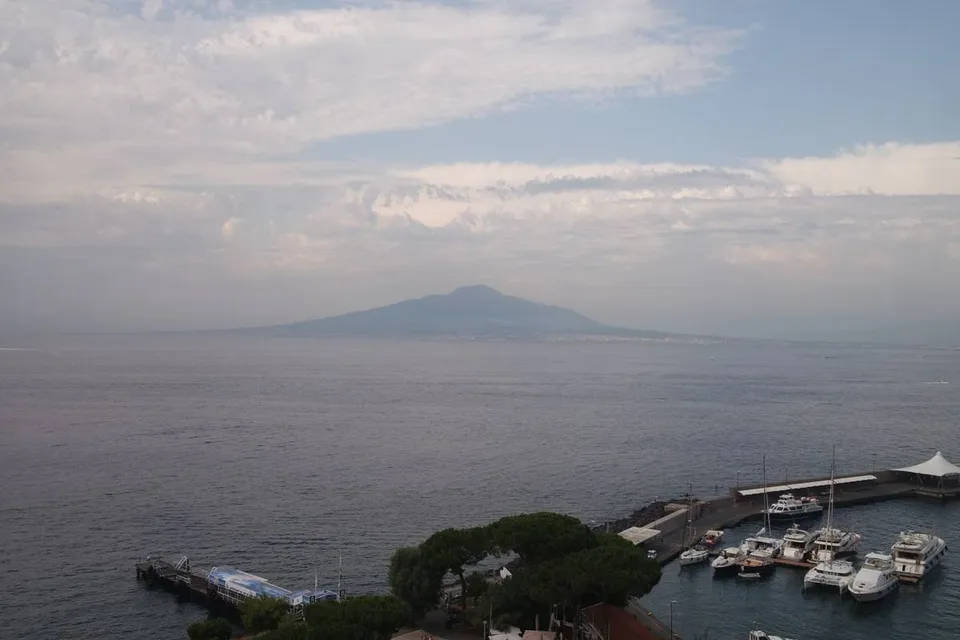
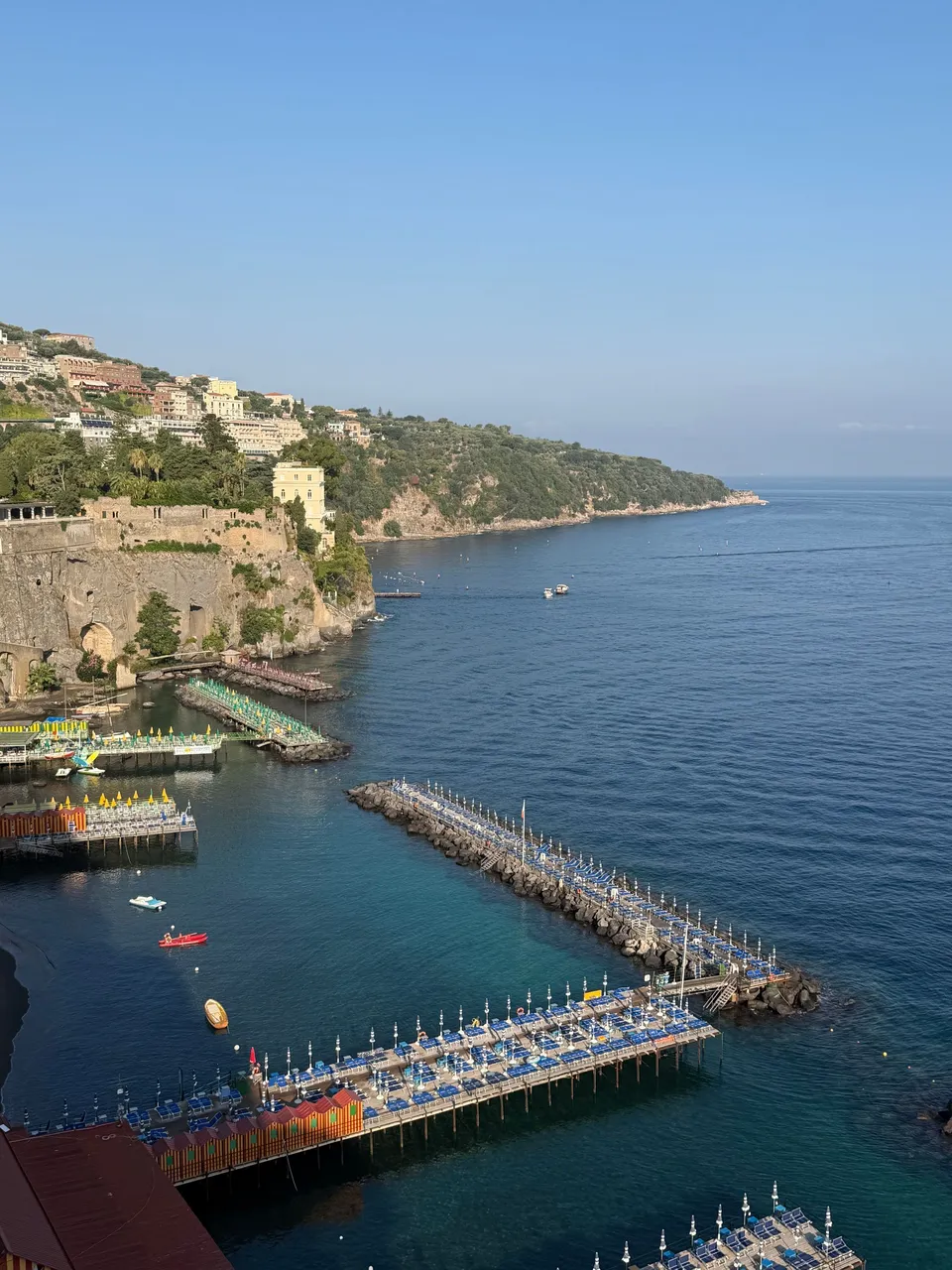
Next to the cloister is the Villa Comunale, a public garden with a terrace overlooking the Gulf of Naples. It is one of the simplest and most pleasant places to stop: you look down at the sea, with Vesuvius on the horizon and boats moving along the coast.
From here you can clearly understand Sorrento's position, suspended over the sea. No long planning is needed: a slow walk and a pause on a bench are enough.
Museo Correale
For an immersion in the history and taste of the area, the Museo Correale is a very interesting stop. The museum preserves collections of decorative arts, paintings and evidence linked to the history of the city and the Campania area.
It is also a good visit for anyone looking for an alternative during the hottest hours or on rainy days. Opening times, days and admission conditions may change: always check the latest information on the museum's official channels.
From the center to the sea: how to complete the visit
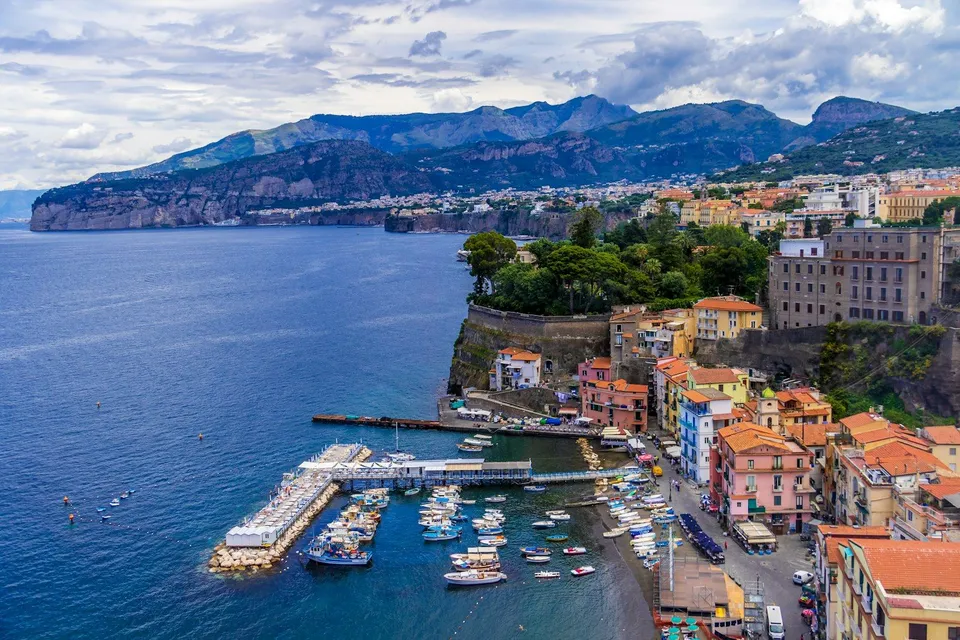
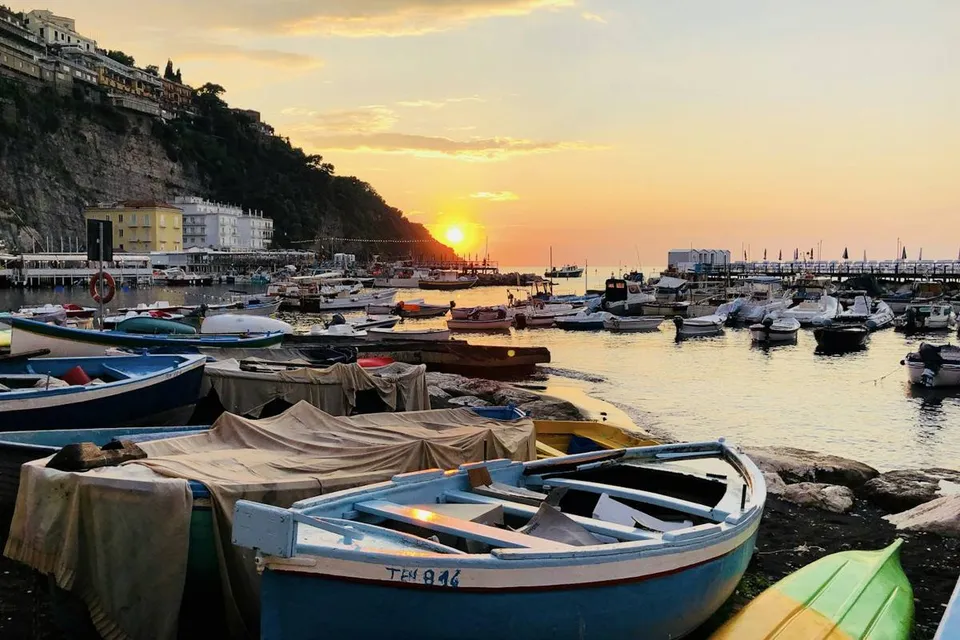
Sorrento's monumental center can be comfortably explored on foot, but the city does not end in its squares. Marina Grande, an ancient fishing village, and Marina Piccola, the ferry harbor, show Sorrento's more maritime side. On the Capo di Sorrento side, you will find the Bagni della Regina Giovanna, a natural pool among the rocks.
To enjoy it at its best, choose the cooler hours for walking and leave room for the unexpected: often the most beautiful memories come from an unplanned turn into a side street.
Frequently asked questions
How much time do you need to see Sorrento's historic center?
The main stops in the center, from Piazza Tasso to the Villa Comunale, are within walking distance and can be visited in a few hours. If you want to include a museum or a longer stop, it is worth allowing more time.
Are the Chiostro di San Francesco and Museo Correale always open?
Opening times may vary depending on the season, events or other needs. Always check the official channels before visiting.
Which places in Sorrento are linked to Torquato Tasso?
Sorrento is the poet's birthplace and Piazza Tasso, the heart of city life, bears his name. It is the most immediate place to recall the link between the city and its literary history.
Sources and useful links
Times, prices and services can change: always check with the official sources before you travel.
Updated: 2026-10-26