A craft born of wood and landscape
Wooden inlay is Sorrento’s most recognizable craft feature. It consists of composing images with thin veneers of different woods, chosen for color and grain, which are then glued onto a support surface. Nothing is painted: the design comes from the combination of the materials.
The tradition becomes firmly established above all in the nineteenth century, when Sorrento became a destination for cultured travelers drawn by the gulf, Vesuvius and the light. Boxes, small tables, caskets and decorated furniture became an elegant way to take a fragment of the city home.
How an inlay is made
The work begins with the drawing, often a landscape, a flower or a musical instrument. Each part is cut from a wooden veneer with a fine saw, then the pieces are fitted together like a mosaic and fixed to the support. Finally, the surface is smoothed and finished.
The woods and motifs
The chromatic variety comes from the species: light, dark, reddish and yellowish tones. The painter works with colors, the artisan with the grain. Recurring subjects include gulf scenes, floral garlands and musical motifs, which echo the city’s identity.
To achieve shading, inlay makers use wood-shading techniques. The result is an image with depth, even though each element is thin and flat.
How to recognize good workmanship
Anyone who wants to buy an inlaid object can make a few simple observations, without needing technical expertise.
- Check the join points: in well-executed works, the pieces fit together with almost no gaps.
- Look at the surface in raking light: it should be even, with no raised edges.
- Observe the grain: it should be the wood’s natural grain, not a print imitating it.
- Ask the artisan which woods were used and how the work was done: people who do this craft are usually happy to talk about it.
A handmade object always carries small irregularities, and it is precisely those that distinguish it from industrial production.
Lemon and home traditions
Alongside wood, the other domestic symbol is the lemon, whose cultivation has shaped the landscape of the peninsula with terraces and pergolas. Limoncello was born in this setting: a liqueur made from citrus peel, passed down in many families as a home recipe and offered at the end of a meal.
For the culinary aspect, we refer you to dedicated articles. Here it is enough to remember that, like inlay, limoncello is knowledge made of patience, local ingredients and habits handed down from generation to generation.
Verses, songs and tarantella
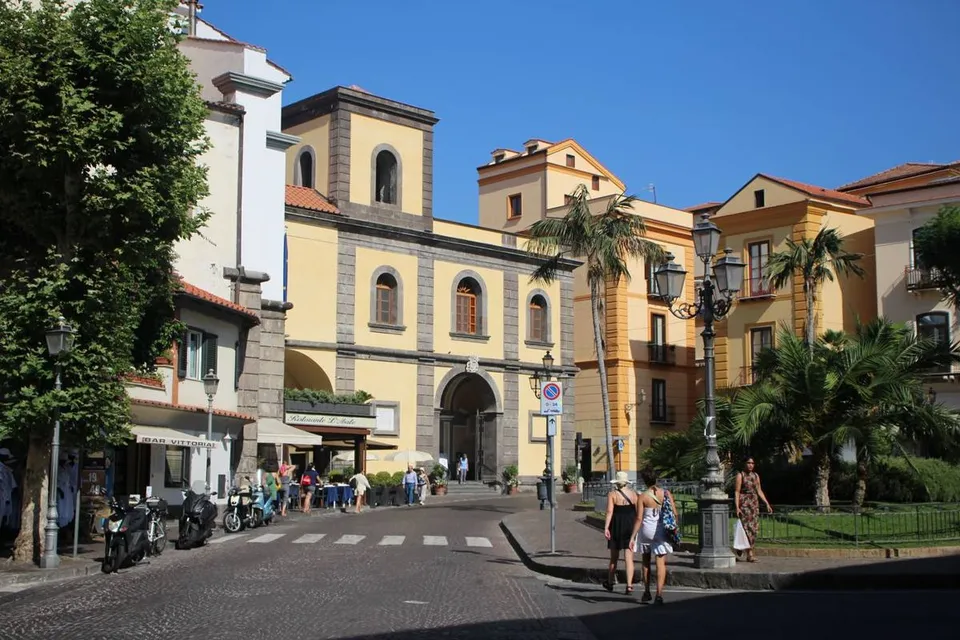
Sorrento is the birthplace of Torquato Tasso, author of Jerusalem Delivered, and the main square bears his name. It is a natural meeting point for taking in the city’s everyday rhythm, between evening strolls and open-air gatherings.
The musical tradition is another important thread. The song «Torna a Surriento», composed in the early years of the twentieth century, helped spread the image of the city around the world. And the tarantella, with castanets and tambourines, remains a recurring presence in folk festivals and folklore performances.
Rites and festivals: Holy Week and the patron saint
Among the most deeply felt moments of the year are the Holy Week processions, which move through the streets of the historic center with confraternities in traditional dress and a silence full of recollection. These are religious ceremonies, not performances: those who attend are asked to do so discreetly, avoiding flash and intrusive movement.
In February the city also celebrates its patron saint, Sant'Antonino. Dates, routes and programs change from year to year: it is best to consult the municipality and parish sources before planning a visit.

An itinerary for meeting the traditions
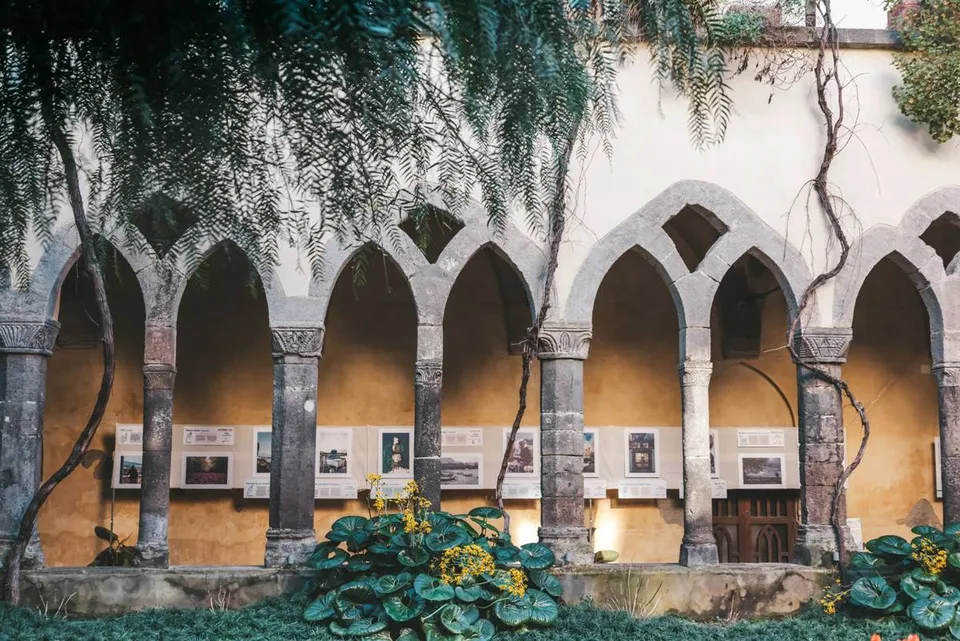
You can build a simple walk through the historic center. From Piazza Tasso, head toward the Sedil Dominova, an ancient loggia that recalls the city’s noble organization, and then toward the Chiostro di San Francesco, an intimate place that sometimes hosts exhibitions and events.
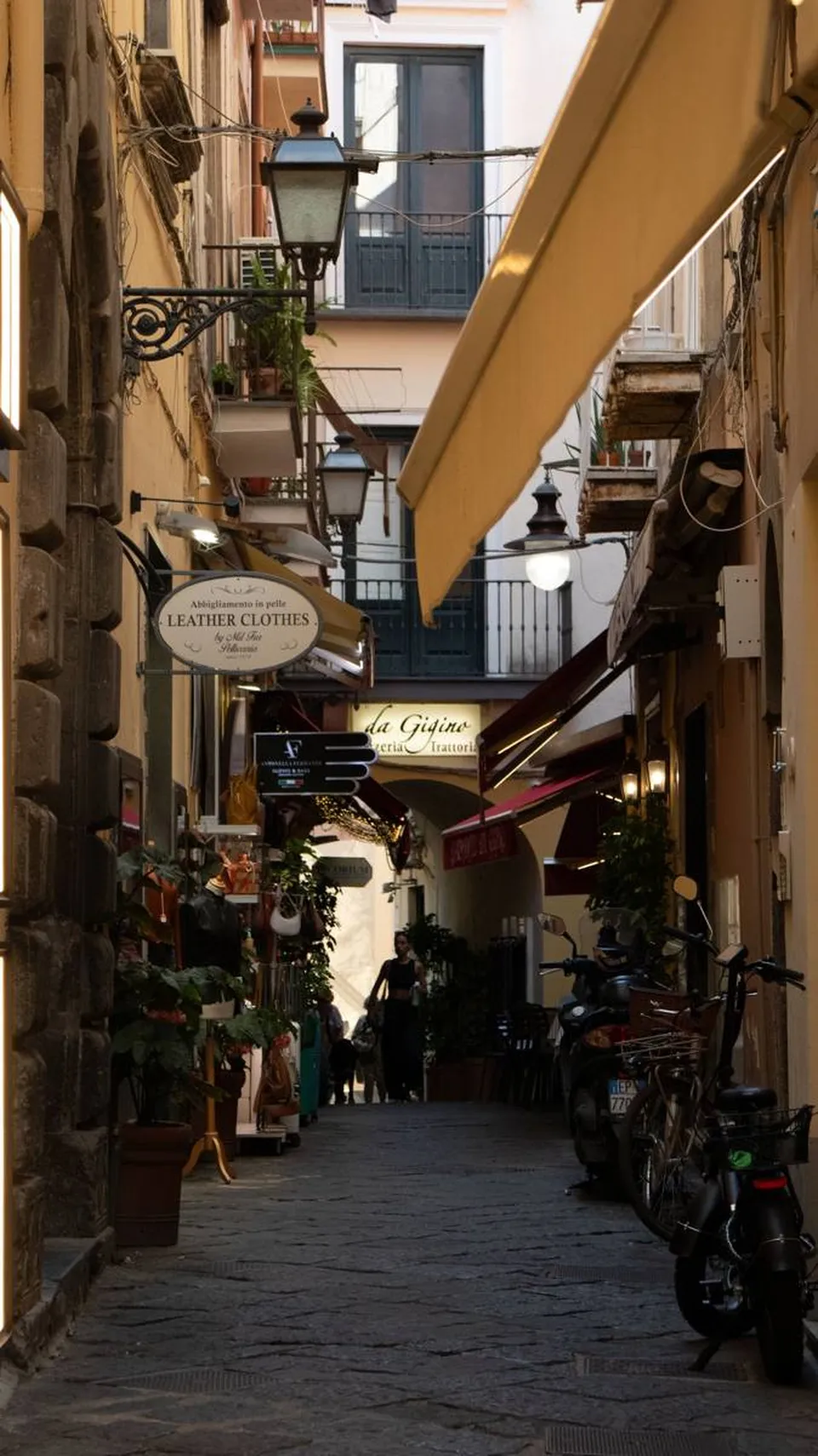
The Museo Correale offers collections of decorative arts, paintings and artifacts, useful for understanding the taste and history of the area. Along the streets of the center it is easy to come across workshops where you can watch woodwork being done: entering with curiosity and without hurry is the best way to understand.
Opening hours, visits and events vary by season: always check the official channels of each place.
Frequently asked questions
What is Sorrento inlay?
It is a decorative technique in which veneers of differently colored woods are cut out and assembled to form images on a surface. It is a craft tradition linked to Sorrento, which became especially established in the nineteenth century.
How can I tell whether an inlaid object is handmade?
Look at the precision of the joints between the pieces, the surface under raking light and the wood’s real grain. You can also ask the artisan which woods are used and how they work: a clear answer is a good sign.
Can you see the Holy Week processions in Sorrento?
Yes, they take place in the historic center and are open to anyone who wants to attend respectfully. Dates, times and routes vary from year to year, so they should be checked with the official sources of the municipality and the confraternities.
Sources and useful links
Times, prices and services can change: always check with the official sources before you travel.
Updated: 2026-10-26