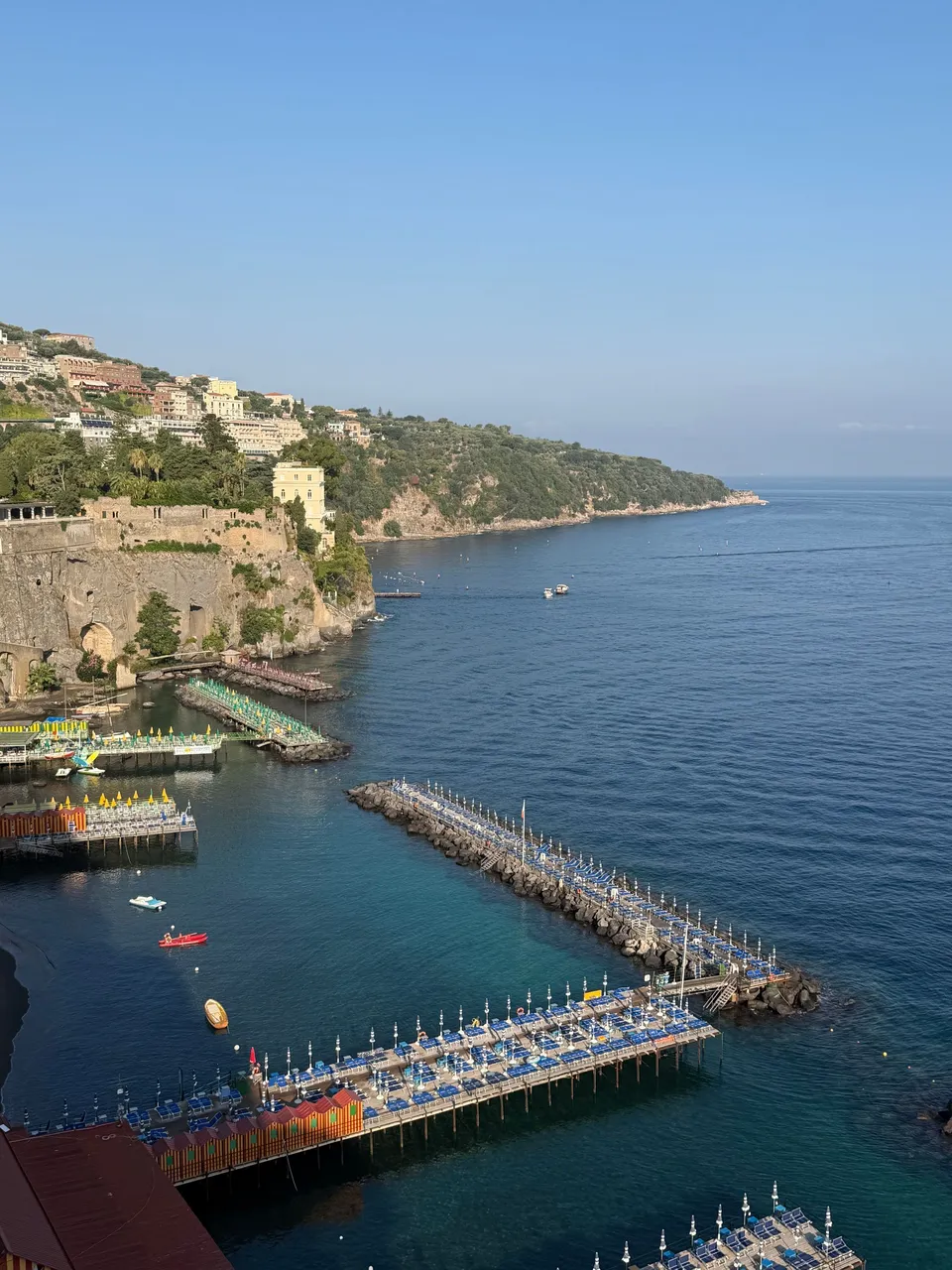
A city of land and sea
Sorrento rises on the Sorrentine Peninsula, overlooking the Gulf of Naples with Vesuvius opposite. Its location explains its connections: a rail line and a road link it to Naples, while the port offers departures to the islands and the gulf.
The city does not have its own airport. The reference airport is Naples, from which you continue by land or by sea. It is worth choosing your means of transport based on what you will do next, not only on how you get there.
By train with the Circumvesuviana
The most straightforward way to get there is the Circumvesuviana, which connects Naples to Sorrento. In Naples it departs from Garibaldi station, within the Naples Centrale complex: if you arrive on a national train, you can change without going far. The terminus is Sorrento, a short walk from Piazza Tasso.
Along the route, the train also serves the areas of the Herculaneum and Pompeii excavations, useful if you want to break up the journey with a visit.
In the busiest months the carriages can be very crowded, so keep your luggage and personal belongings under control. Timetables, frequencies and any suspensions should be checked on the operator’s official website before you leave.
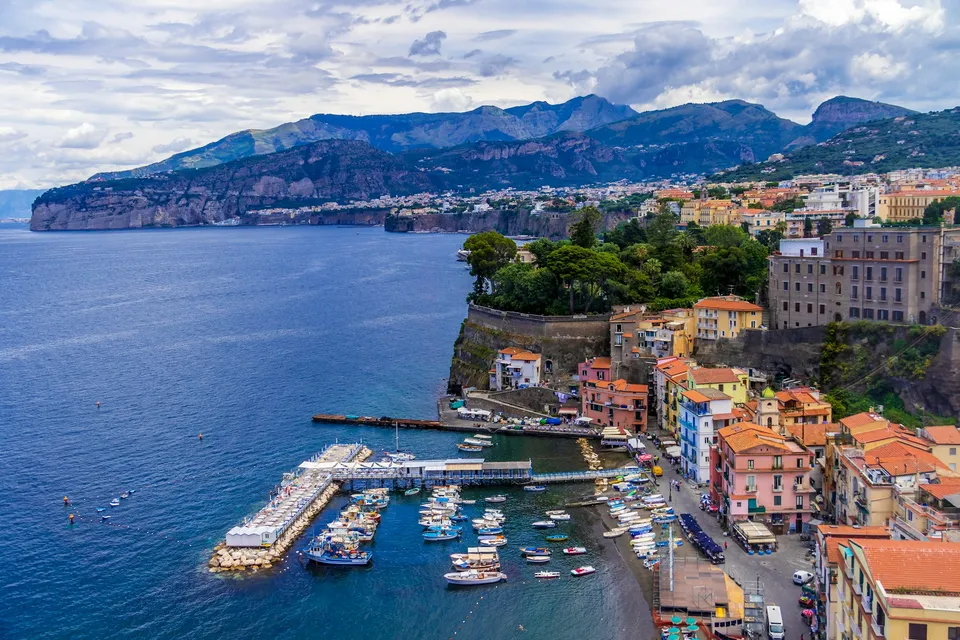
From the airport and from farther away
Those landing in Naples must first reach the city center, where the station and ports are located. You can use public transport, a taxi or a private transfer booked in advance. With taxis and transfers, clarify the conditions of the ride before getting in.
Those traveling in Italy on long-distance trains instead get off at Napoli Centrale and continue from there to Sorrento.
By ferry: Marina Piccola
Marina Piccola is the ferry port. From here, boats depart for Capri and Naples and, in season, for the Amalfi Coast. Arriving by sea immediately gives you the image of the city on the cliff.
The port is lower than the center: on the way there you go down, on the way back you go up, and the difference in elevation is noticeable with luggage. If you have heavy suitcases, it is worth considering a motorized means of transport for the last stretch.
Schedules, seasonality and actual sailings also depend on sea conditions. Always check updated information on the official channels of the shipping companies.
By car: the road and parking
By car, you arrive from the A3 motorway by taking the Strada Statale Sorrentina, which crosses the peninsula. During peak periods it can be congested, and travel times become unpredictable.
The real obstacle is parking: spaces in the center are limited and some areas have traffic restrictions. If you do not plan to explore the peninsula by car, it is often more convenient not to have one. For any access restrictions and parking areas, consult the municipality’s guidance.
By bus, also toward the Coast
Scheduled buses connect Sorrento with the towns of the peninsula and, beyond the ridge, with the Amalfi Coast along the scenic road. The journey is scenic, but the road is narrow and winding and times vary with traffic.
Alternatively, in season, there is the ferry to the Coast, which avoids the curves and offers another perspective on the shoreline. For both options, check in advance routes, stops and ticket-purchase rules on official sources.

On foot between center, marinas and Capo
The center is easy to explore on foot, with Piazza Tasso as the reference point. From there, without transport, you can reach the Villa Comunale with its terrace over the gulf, the Chiostro di San Francesco, Sedil Dominova and the Correale Museum. The Vallone dei Mulini is also within walking distance.
For Marina Grande, the fishing village, you go down from the center on foot: wear comfortable shoes, because you will climb back up on the way return.
Capo di Sorrento, where the Bagni della Regina Giovanna are located, is farther away. You can get there with a long walk, local transport or a taxi, depending on time and energy.
Sorrento as a base: how to organize yourself
The city works well as a starting point: the train takes you to Naples, ferries to the islands, buses and seasonal services to the Coast. For this reason, people often leave the car out of their plans and rely on a mix of transport.
Before moving around, always check timetables, any strikes and sea conditions on official websites. Traveling light makes everything easier, especially in the port and on the hills.
Frequently asked questions
Does Sorrento have a railway station?
Yes, Sorrento is the terminus of the Circumvesuviana, the line that connects it to Naples. The station is a short walk from Piazza Tasso. For routes and frequency, consult the operator’s official website.
How do you get to Sorrento from Naples?
The main options are the Circumvesuviana train, which departs from Garibaldi station, and the ferry, which arrives at Marina Piccola. By car, you take the Strada Statale Sorrentina after exiting the motorway. Always check timetables and conditions on official sources.
Do you need a car to visit Sorrento?
Generally no. The center can be visited on foot and there are trains, ferries and buses for Naples, the islands and the Coast. A car can be useful for exploring the peninsula, but parking in the city is limited.
Sources and useful links
Times, prices and services can change: always check with the official sources before you travel.
Updated: 2026-10-26