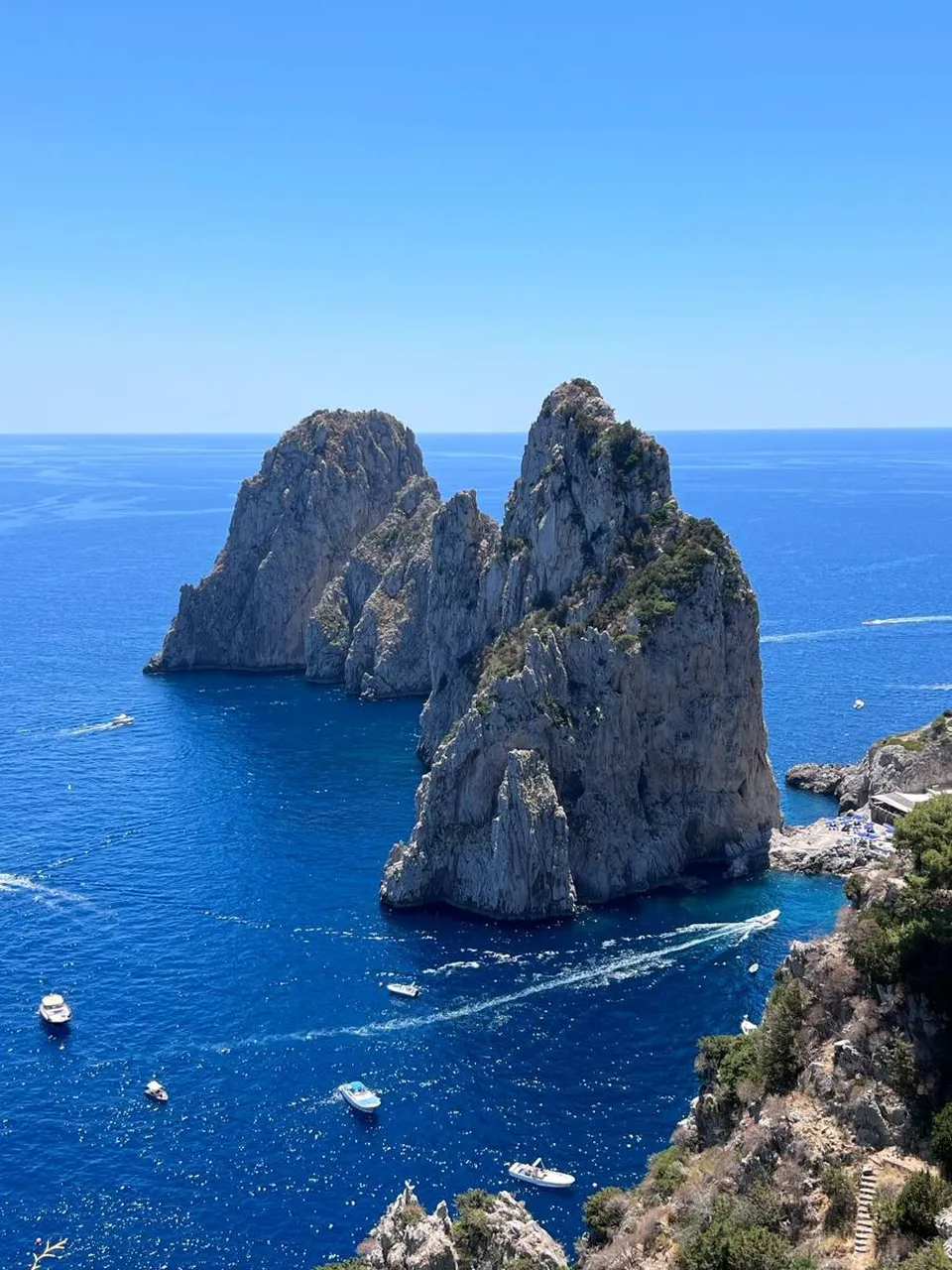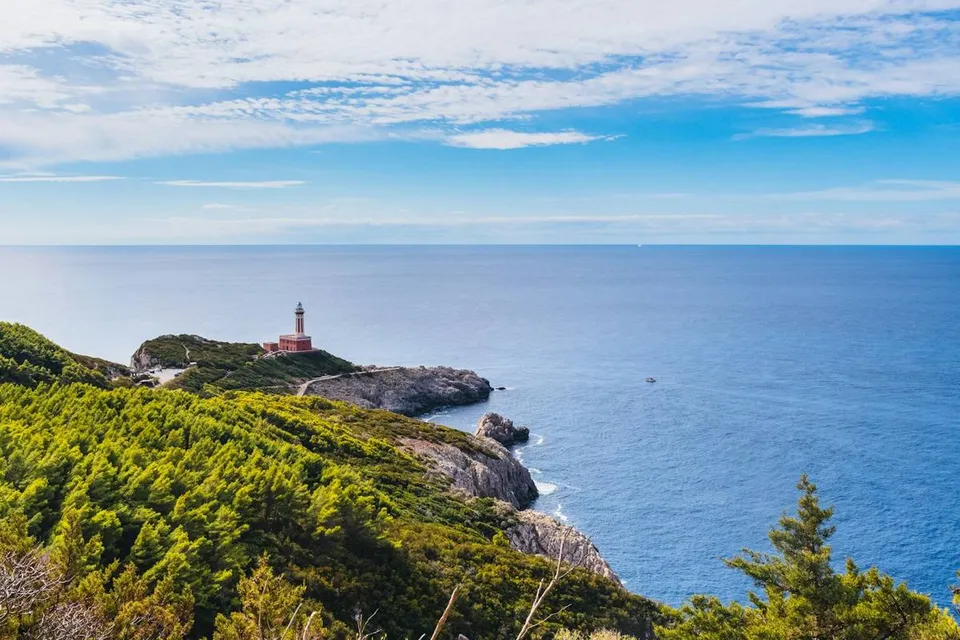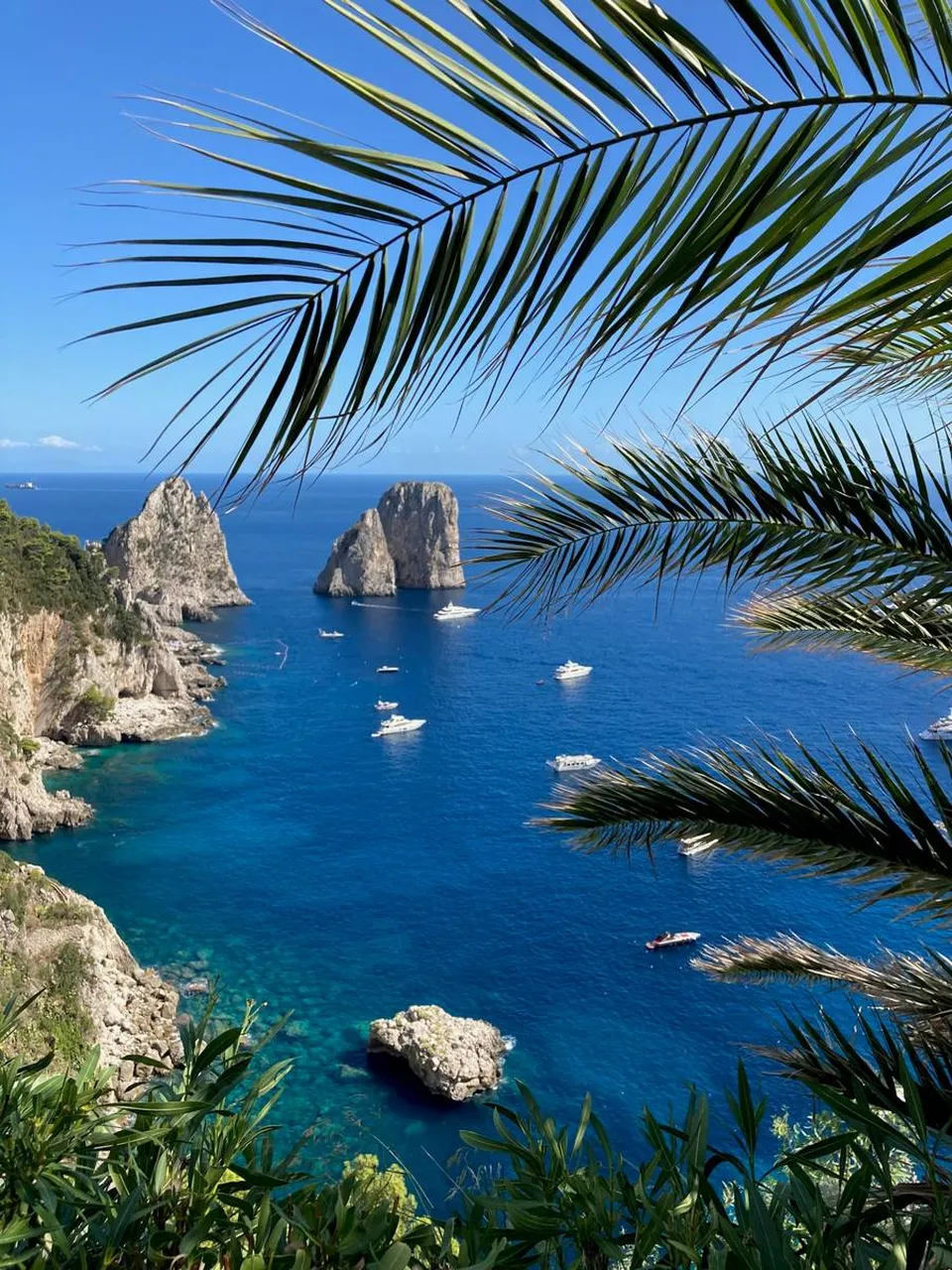
The eastern side, the best one for walking
Capri’s municipality faces east, and it is on that side that the island’s most striking routes unfold between town and sea. Here Capri changes character: houses give way to gardens, terraced kitchen plots, pines, and Mediterranean scrub, and the noise of the center quickly fades.
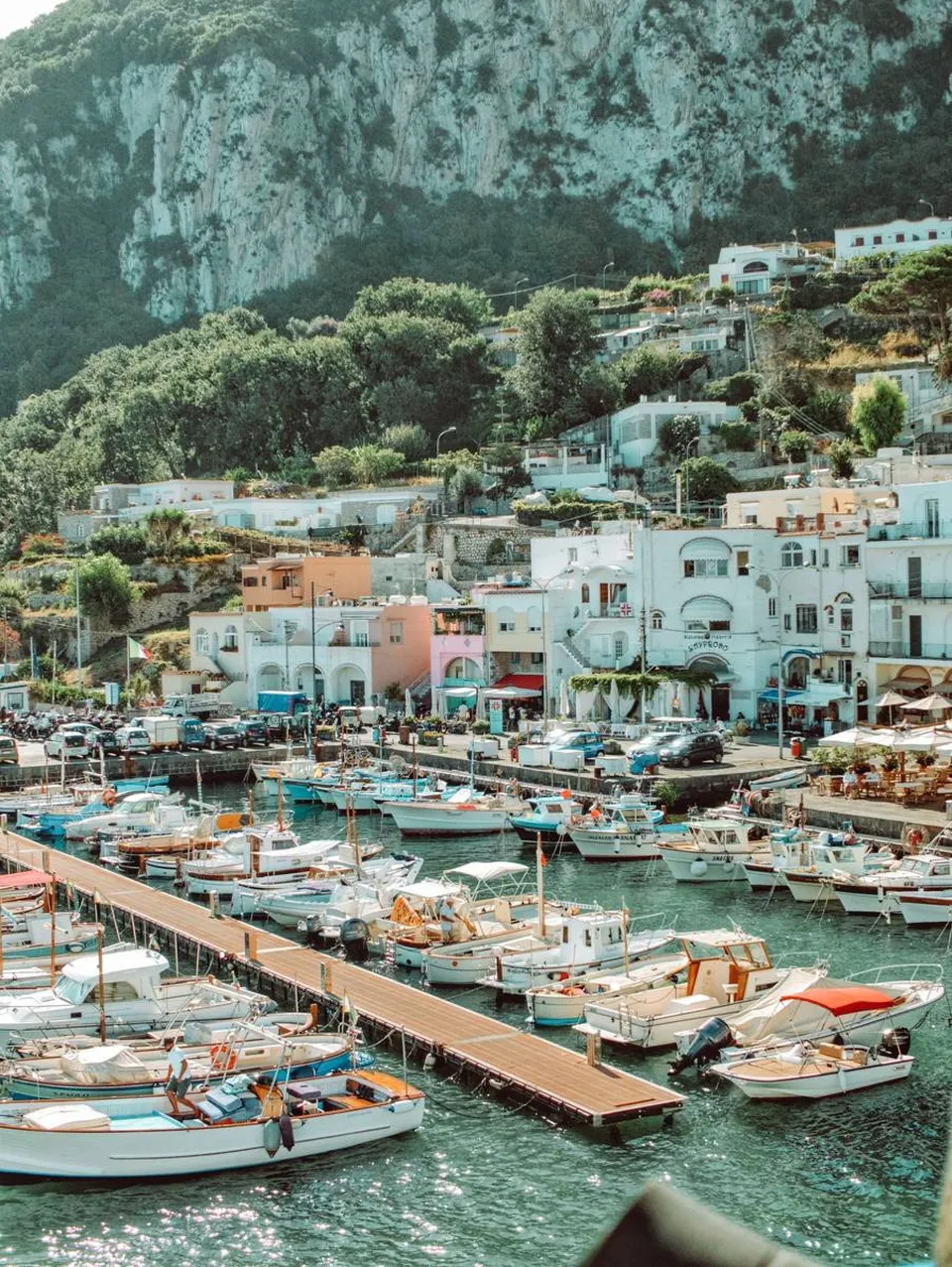
The walks discussed here both start from the Piazzetta area, which is reached by funicular from Marina Grande. No hiking gear is needed, but proper shoes are: the surfaces are often uneven, with steps and sloping stretches.
Via Tiberio: from the Piazzetta to Villa Jovis
The route to Villa Jovis follows Via Tiberio, a pedestrian road that climbs gradually, leaving the center behind. You pass narrow lanes, then more open stretches, with walls, villas hidden by greenery, and short windows onto the sea.
It is a steady climb, never technical, but one to approach calmly. It helps to start without watching the clock: the pleasure is stopping now and then to look at the gulf widening as you climb.
Villa Jovis: what to expect
Villa Jovis was the residence commissioned by Emperor Tiberius, who spent the last years of his rule on Capri. It stands in the northeastern part of the island, in a dominant position above the sea. Today, imposing ruins remain: service rooms, cisterns for collecting water, corridors, and terraces that hint at the scale of the complex.
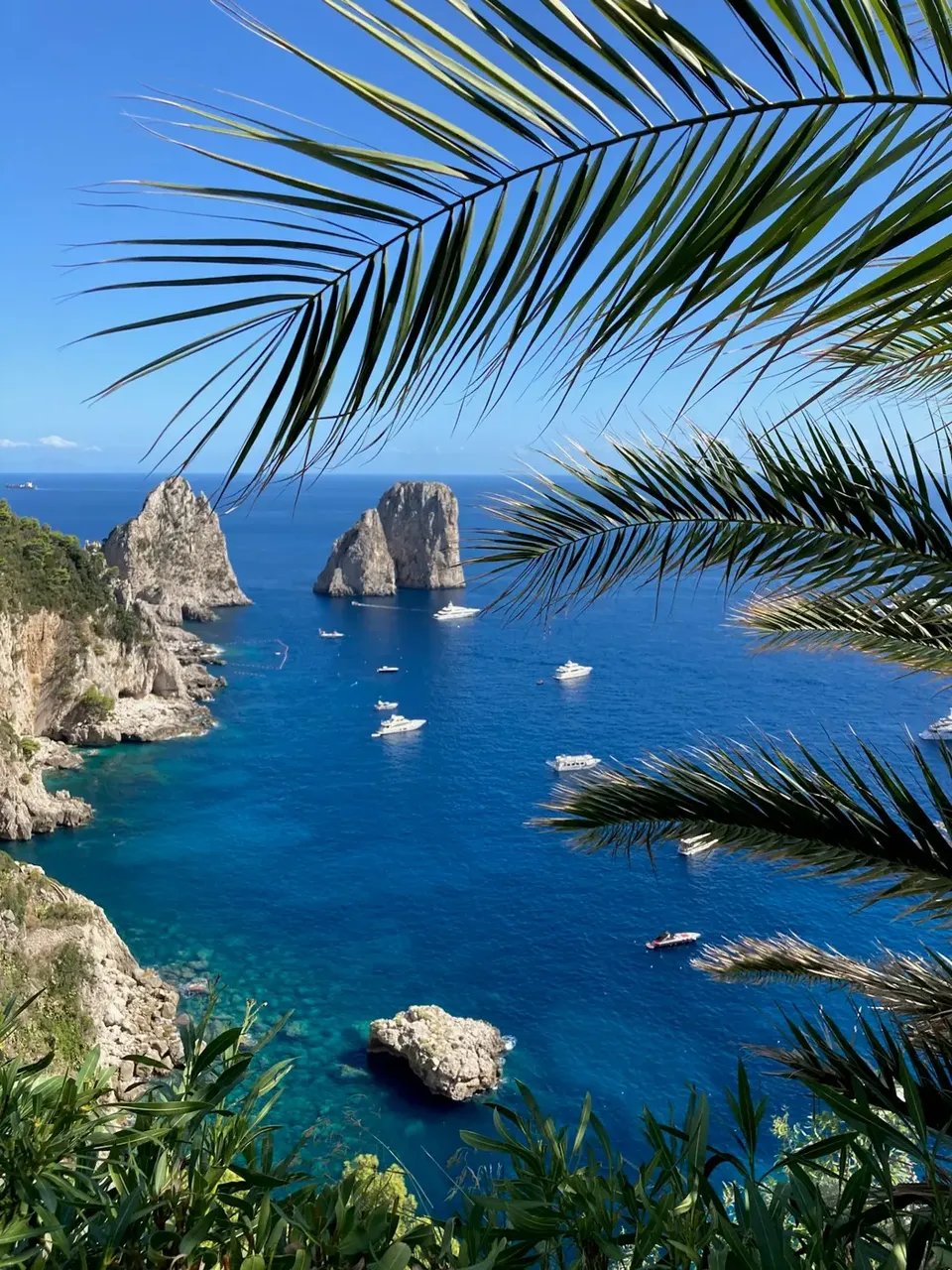
The charm of the place lies as much in the stones as in the view: from the archaeological area, the gaze extends over the Gulf of Naples and, in good visibility, to the Sorrento coast. Nearby is also the spot known as Salto di Tiberio, tied to a legend handed down by ancient sources: a sheer overlook to be admired with caution and from a safe distance.
Via Matermània and the Natural Arch
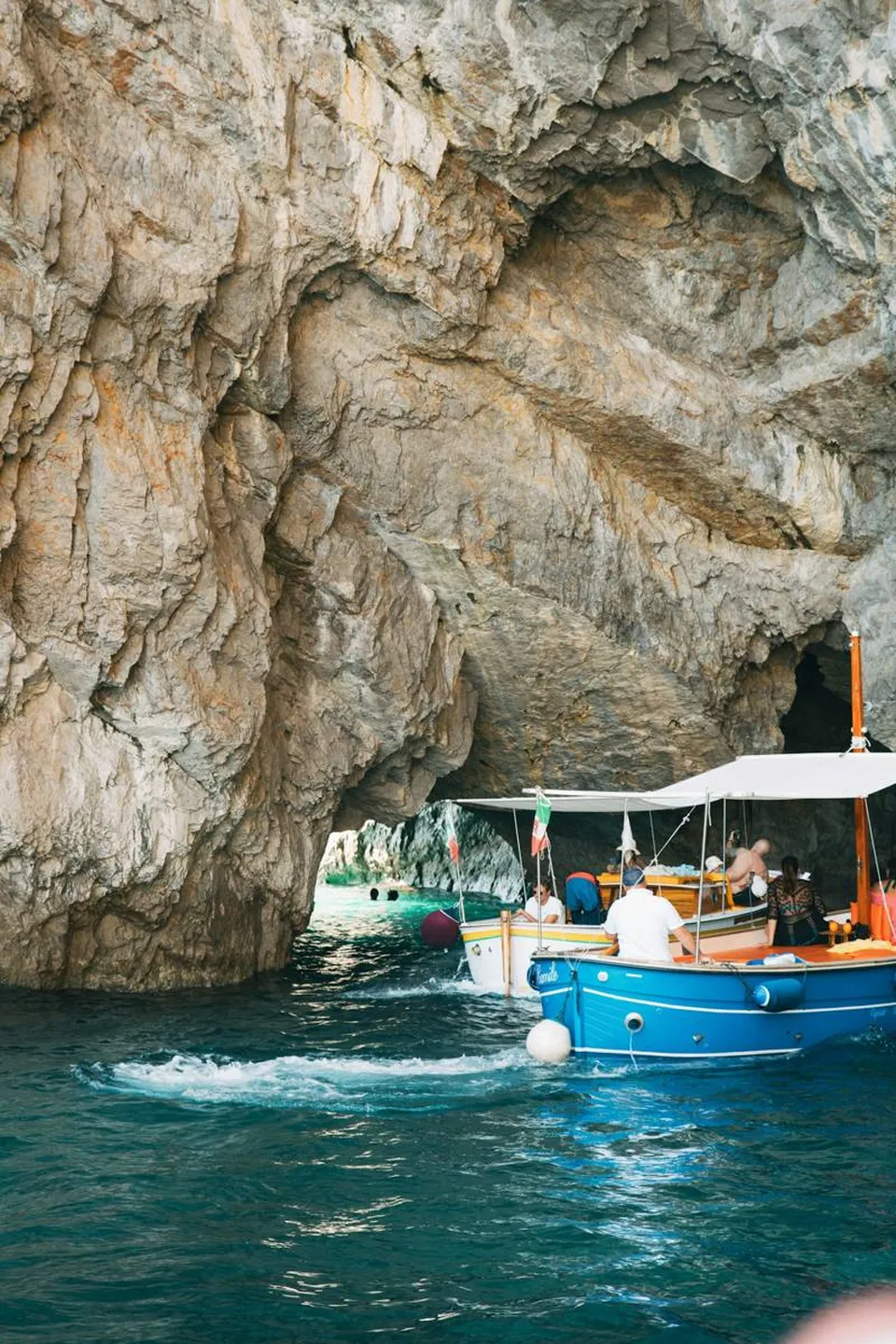
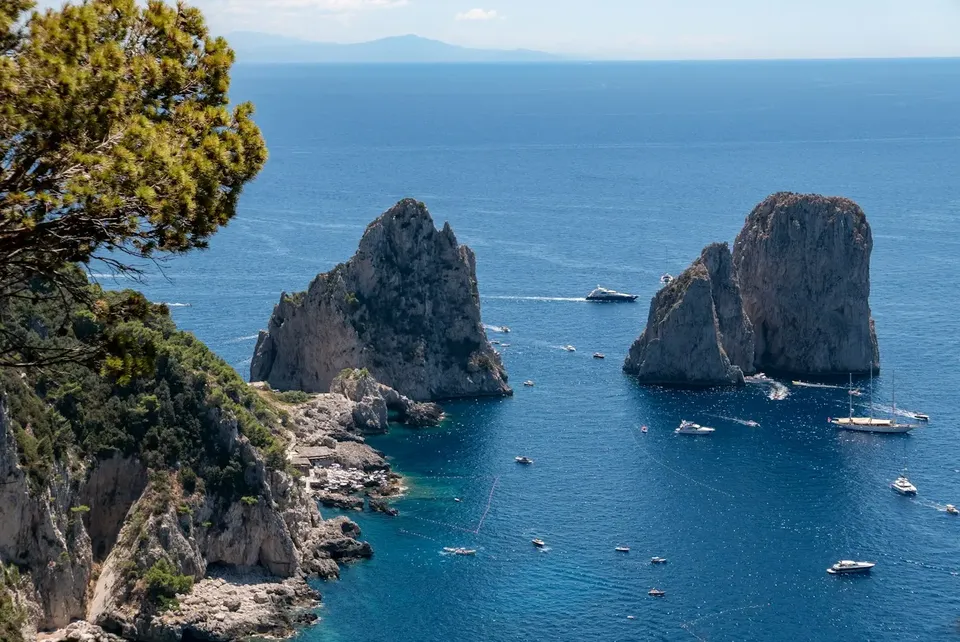
The other walk descends toward the wilder side of the coast, along Via Matermània. The route crosses terraces and shaded stretches, with stairways and passages among the rock, until it reaches the Natural Arch, a great opening carved into the limestone by time and the elements.
The arch frames the sea like a window and lends itself to a peaceful pause. In the surroundings you will also find caves and recesses linked to the island’s ancient history: view them from outside and always follow the signs posted on site.
How to combine the two destinations
The two walks can be done on separate days or combined, if you have time and a good level of fitness. A reasonable plan:
- start from the Piazzetta and head to the Natural Arch via Via Matermània;
- climb back toward the center and then take Via Tiberio to Villa Jovis;
- leave room for stops, photos, and, if needed, a relaxed return.
Those who prefer just one destination can choose according to mood: the Natural Arch for its coastal, rocky atmosphere, Villa Jovis for history and its wide panoramic viewpoint. Overall, it is better not to pack everything into the hottest hours of a summer day.
What to bring and how to behave
To walk well on Capri, just a few smart choices are enough:
- closed shoes with grippy soles, better than flip-flops;
- water and a hat, because exposed stretches can be long;
- a light backpack, with an extra layer for the wind;
- respect for private property and vegetation: always stay on marked paths.
Near sheer edges, always keep a prudent distance and, with children, hold their hand firmly.
Before you set out: what to check
On an island with steep shores, paths may be closed or restricted for maintenance, bad weather, or landslides. Before setting out, check the status of the trails with the Municipality of Capri or local tourist offices.
The same applies to the opening and visiting arrangements for Villa Jovis, which may change during the year: consult updated official sources. Also check the weather forecast and, if you are arriving for the day, the return ferry connections.
Frequently asked questions
Are the walks to Villa Jovis and the Natural Arch suitable for everyone?
They are walking routes, not climbing routes, but they include slopes, steps, and uneven ground. Anyone with mobility difficulties or traveling with strollers should check the characteristics of the sections in advance.
Where do you start to reach these two destinations?
Both are reached on foot from the Piazzetta area of Capri, which is reached by funicular from Marina Grande. From there, follow Via Tiberio for Villa Jovis and Via Matermània for the Natural Arch.
Can I always count on access to the trails?
No: stretches of path and archaeological areas may be closed or restricted because of bad weather or works. Always check the official information from the municipality or the competent authorities before visiting.
Sources and useful links
Times, prices and services can change: always check with the official sources before you travel.
Updated: 2026-10-26