A village to read vertically
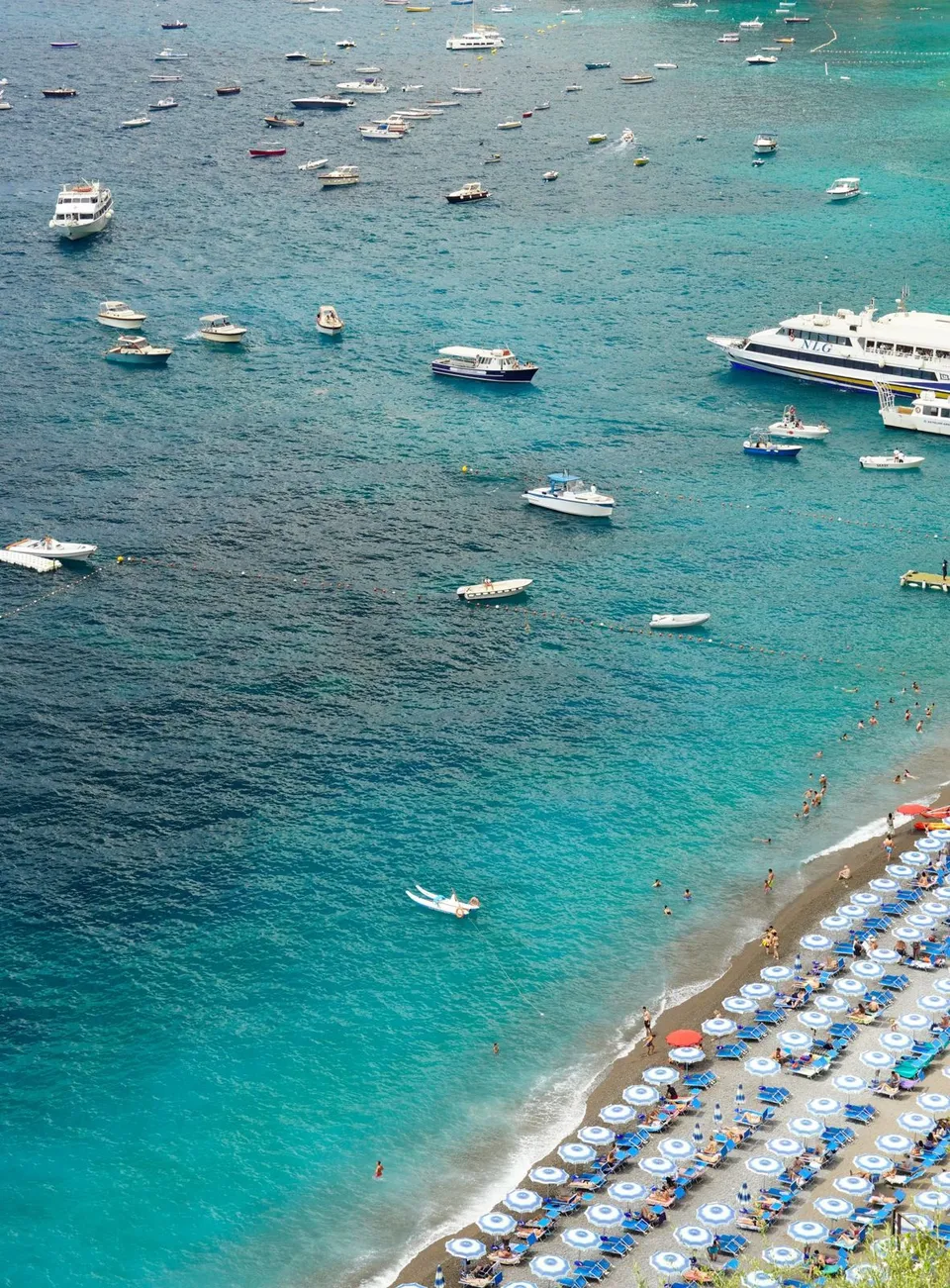
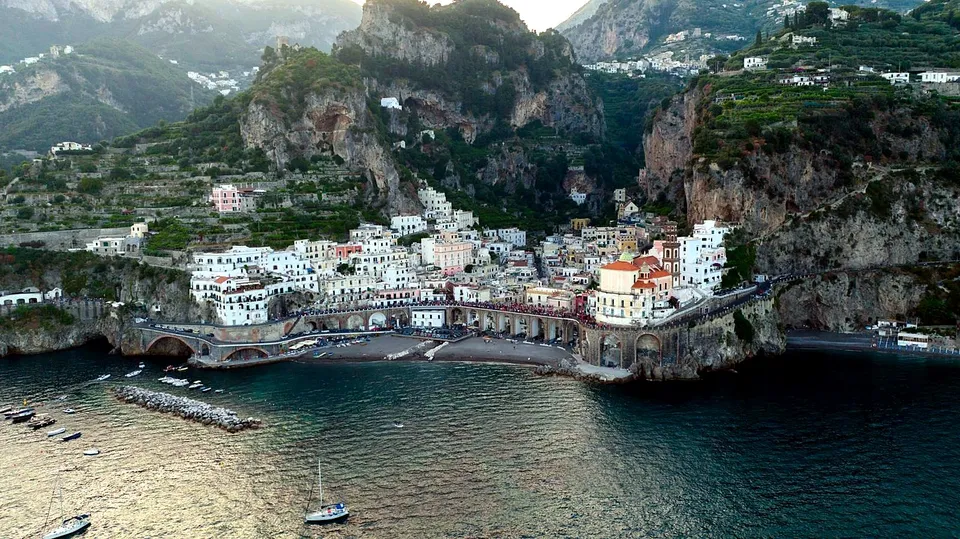
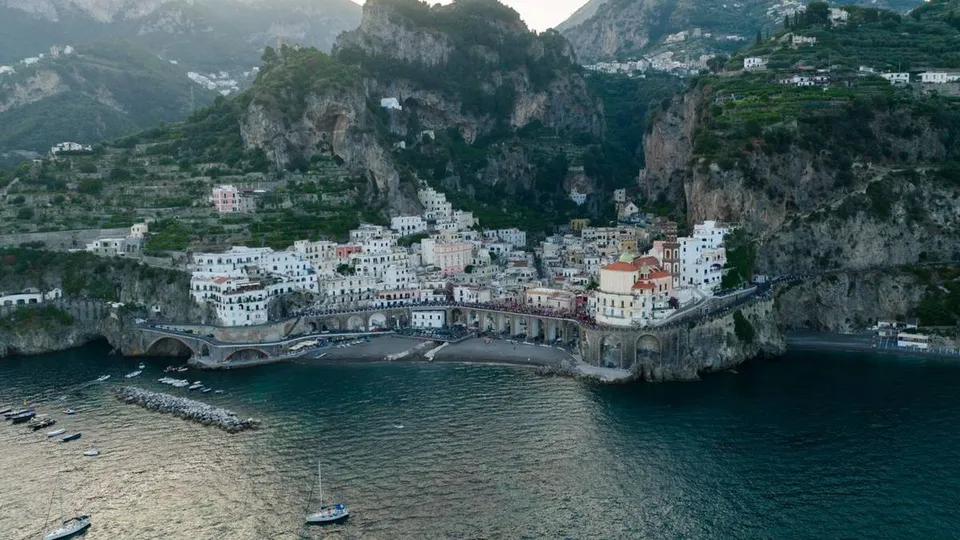
Atrani develops between the sea and the rock, and the first thing to understand is that here you mainly walk up and down. The houses are pressed close together, connections are by stairways and narrow lanes, and the state road passes above the built-up area on arches that are part of the landscape.
Precisely because of its size, the village can be visited without hurry and without a long list. The stops below are enough to give you a clear idea, and the beauty lies in leaving room for detours too.
Piazza Umberto I, the little square enclosed by the houses
This is the place to start. Piazza Umberto I is a small square enclosed by houses, with access from the sea under the arches of the state road: you enter almost without noticing, moving from a transit place to an intimate, enclosed one.
It is the village's living room, and it is worth pausing for a moment to observe how it is made: the buildings around it, the stairs climbing upward, the sea just a few steps behind. The story of how the square is lived in would deserve a chapter of its own; here it is enough to know that it is the gateway to the village.
The collegiate church of Santa Maria Maddalena
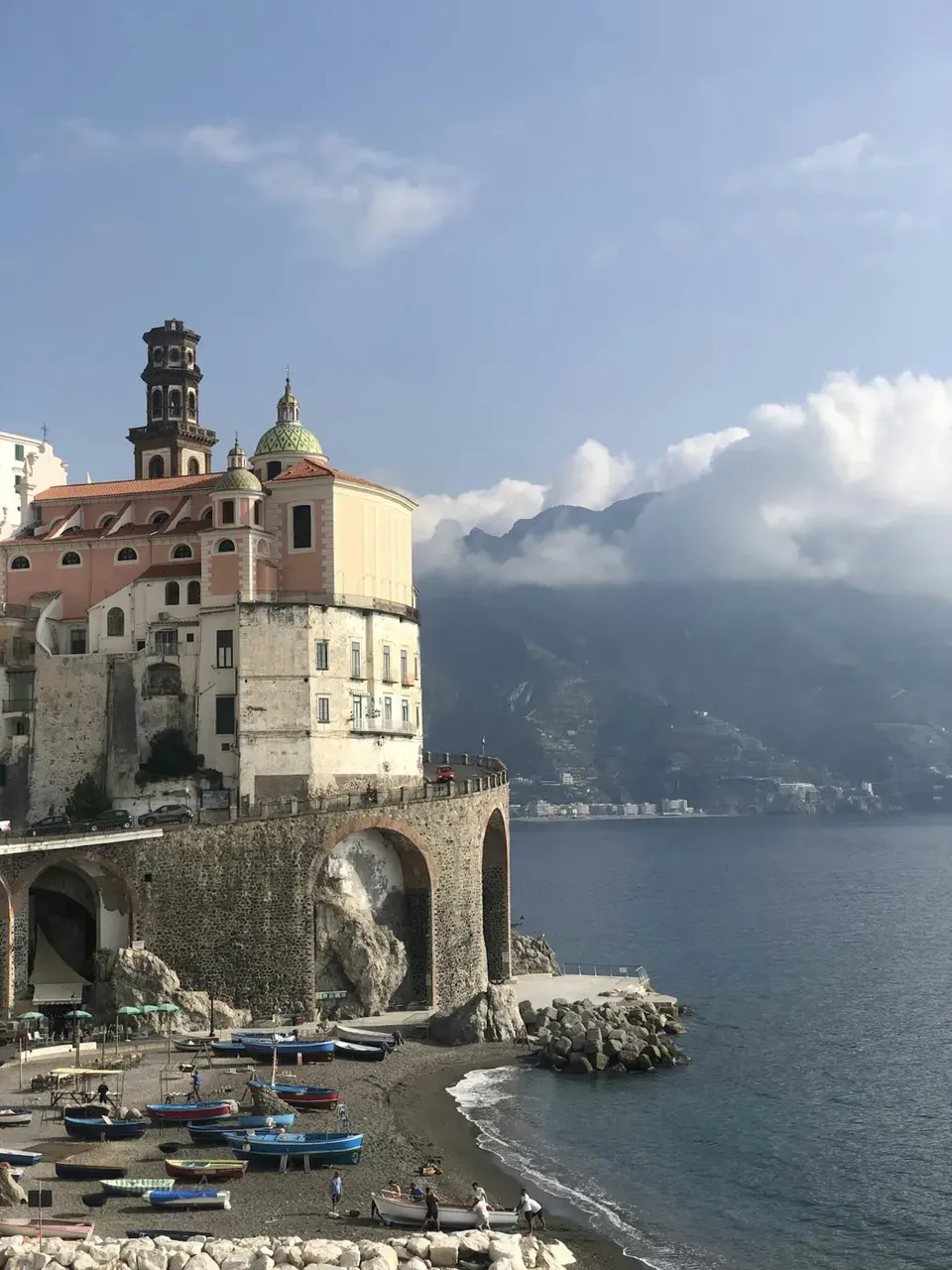
Overlooking the sea, the collegiate church of Santa Maria Maddalena is the most recognizable religious building in Atrani, thanks to the majolica dome that stands out in the village panorama. It is dedicated to the saint whom the village celebrates every 22 July.
Before you go up, look at the church from a distance and then up close: the colorful dome and its position above the sea say a lot about Atrani's character. For access to the interior, check the parish's indications in advance, because opening times may vary.
San Salvatore de' Birecto
According to tradition, the doges of Amalfi were crowned in the church of San Salvatore de' Birecto. It is a reminder of the time when the Maritime Republic had in this small village a place linked to its rituals of power.
The value of the place lies above all in this memory: rather than looking for grand monuments, it is worth pausing over the meaning of a simple building that carries a fragment of Amalfi's history. Here too, for visits inside, find out about opening arrangements in advance.
Lanes, stairways and covered passages
Atrani's real itinerary is made of what lies between one stop and the next. Narrow lanes, stairways that change level in just a few steps, and covered passages that seem like tunnels between houses: this is the architecture of a village that grew out of necessity, in a small space.
A practical tip: wear comfortable shoes with good soles, because there are many steps and they can be slippery. You do not need a precise map; if you get lost, just head downhill to find the sea again.
The beach in front of the village
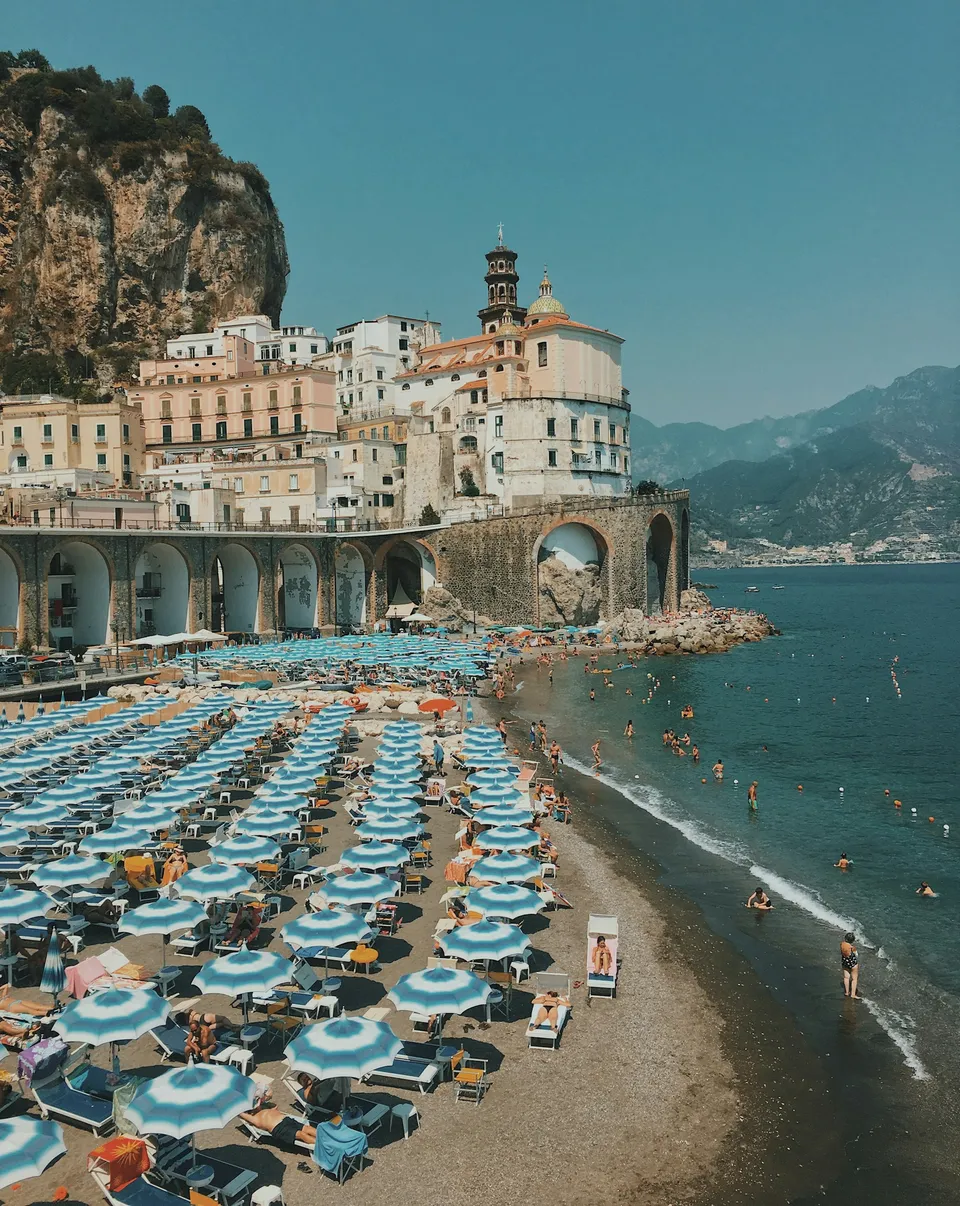
In front of the town lies the beach, which completes the picture: from here you can see Atrani as it appears to those arriving by sea, with its stepped houses, the dome of the collegiate church and the rock behind it.
Even without stopping for long, it is worth a pause to look at the village from below. Sea conditions and access vary with the season and the weather, so check local notices before planning your day.
The Torre dello Ziro and the paths to Ravello and Pontone
Looking up above the village, you notice the Torre dello Ziro, a visual landmark that recalls how closely Atrani is tied to the slope above it.
From here, paths also lead up to Ravello and Pontone for those who want to extend the visit and look at the village from above. These are uphill routes, with elevation gain and stepped sections: before setting out, check the state of the route on official sources (the Comune, park authorities or hiking associations) and find out about weather conditions.
How to organize the visit
Atrani lends itself to a short but careful visit. A sensible sequence starts at Piazza Umberto I, goes up toward the churches, gets lost among lanes and passages, and ends in front of the sea.
If you want to see the village at its most heartfelt moment, there is the feast of Santa Maria Maddalena on 22 July: the program changes from year to year, so consult the official channels of the Comune and the parish. The same goes for transport and connections with Amalfi, which can also be reached on foot along the coast.
Frequently asked questions
How much time does it take to visit Atrani?
The village is small and can be explored at a leisurely pace on a short visit. If you want to include the churches, the beach or a stretch of path toward Ravello or Pontone, it is worth allowing more time.
Can Atrani be reached on foot from Amalfi?
Yes, the two villages are close and connected along the coast by just a few minutes' walk. For the route and any alternative transport options, check up-to-date information from official sources.
When is Santa Maria Maddalena celebrated?
The feast is celebrated on 22 July. For the detailed program each year, consult the Comune and the parish.
Sources and useful links
Times, prices and services can change: always check with the official sources before you travel.
Updated: 2026-10-26