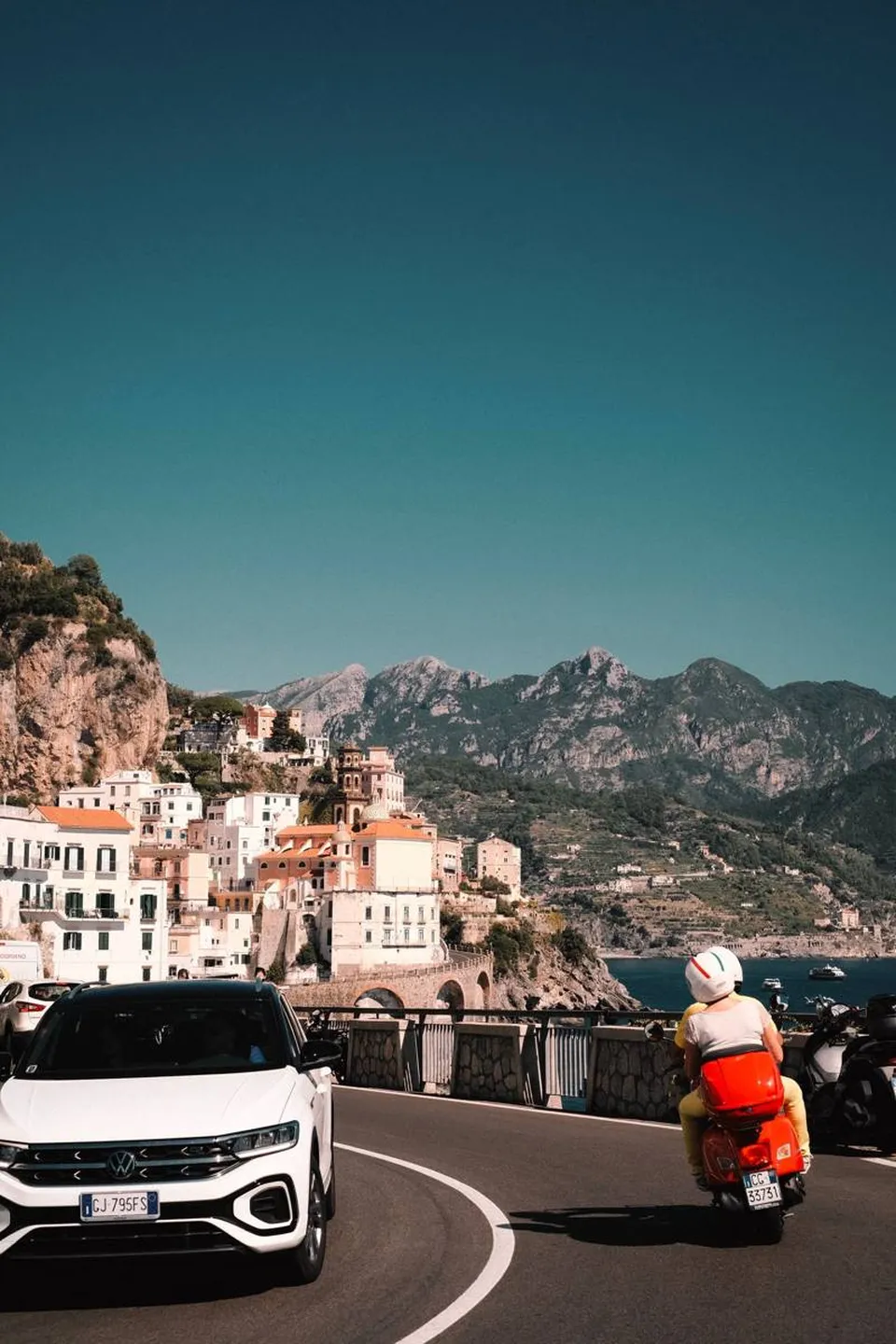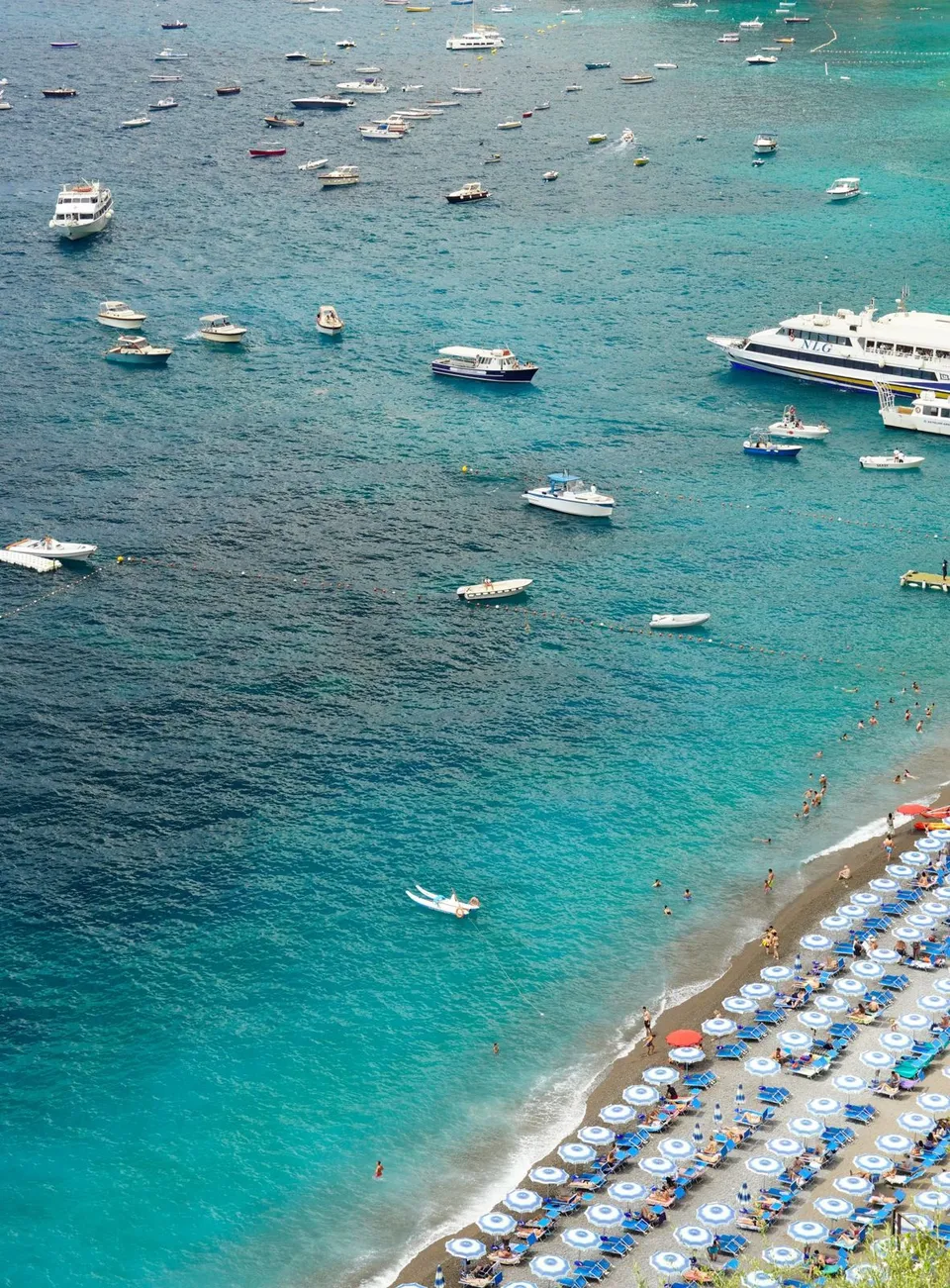
A compact village, a complete photo set
In Atrani, you do not need to travel far to build a photo story. In a very small area you will find a little square, a beach, alleyways, stairways, domes and a rocky backdrop with houses stacked one on top of another.
The advice is to move with a clear idea: choose three or four viewpoints, return at different times, and leave the rest to exploration. The village is small, but the details are many.
Piazza Umberto I and the arches by the sea
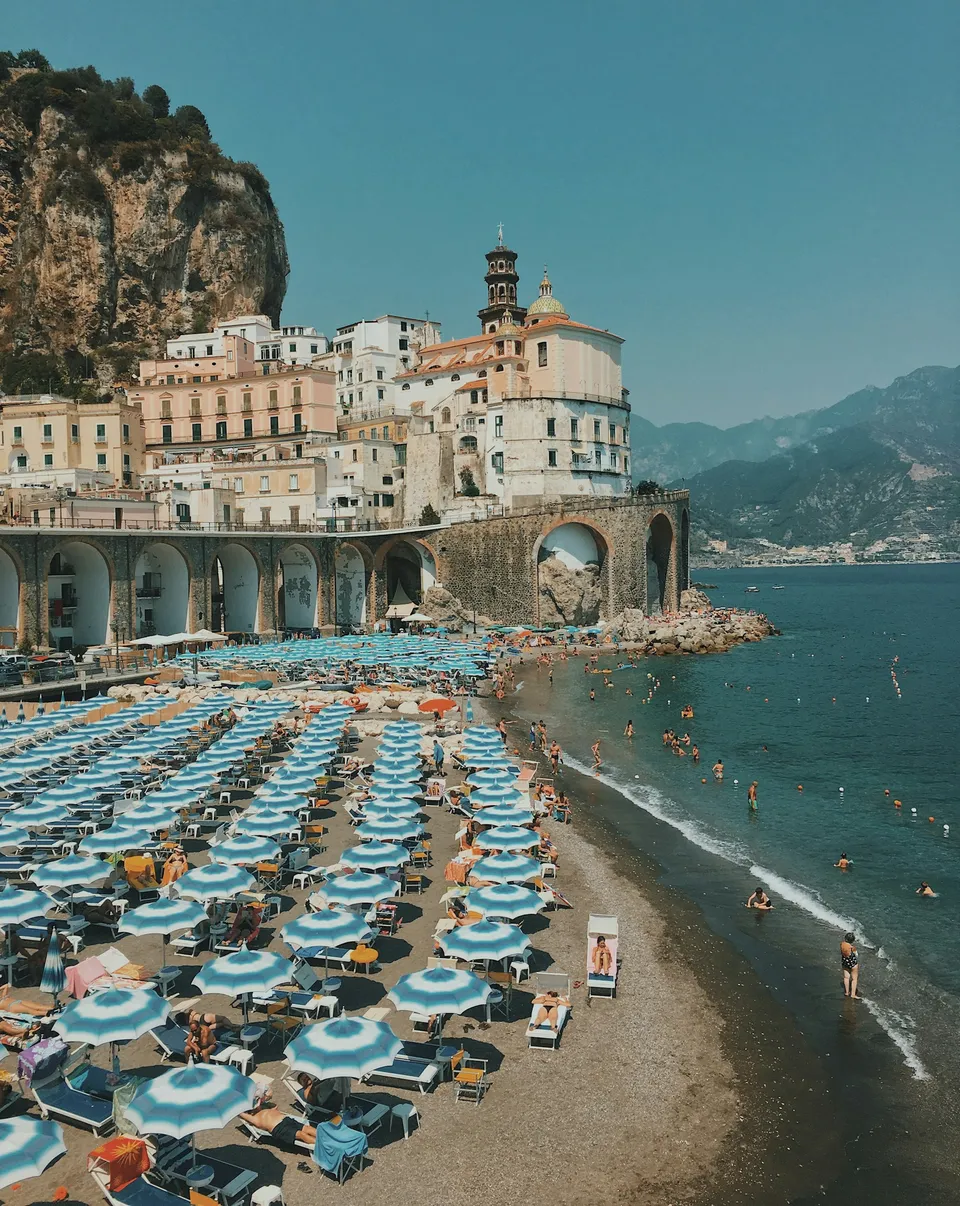
This is the town’s most recognizable image: a little square enclosed by houses, with access from the sea beneath the arches of the state road. This structure creates a natural frame, perfect for playing with geometry.
Try shooting from beneath the arches toward the square, using the light at the far end like a small stage. Then do the reverse: from the square toward the sea, with the arches framing the horizon. A wide-angle lens helps convey the feeling of a tightly held space.
The square is a place of everyday life: if you include people, do so discreetly and ask permission for close-ups.
The tiled dome from the beach
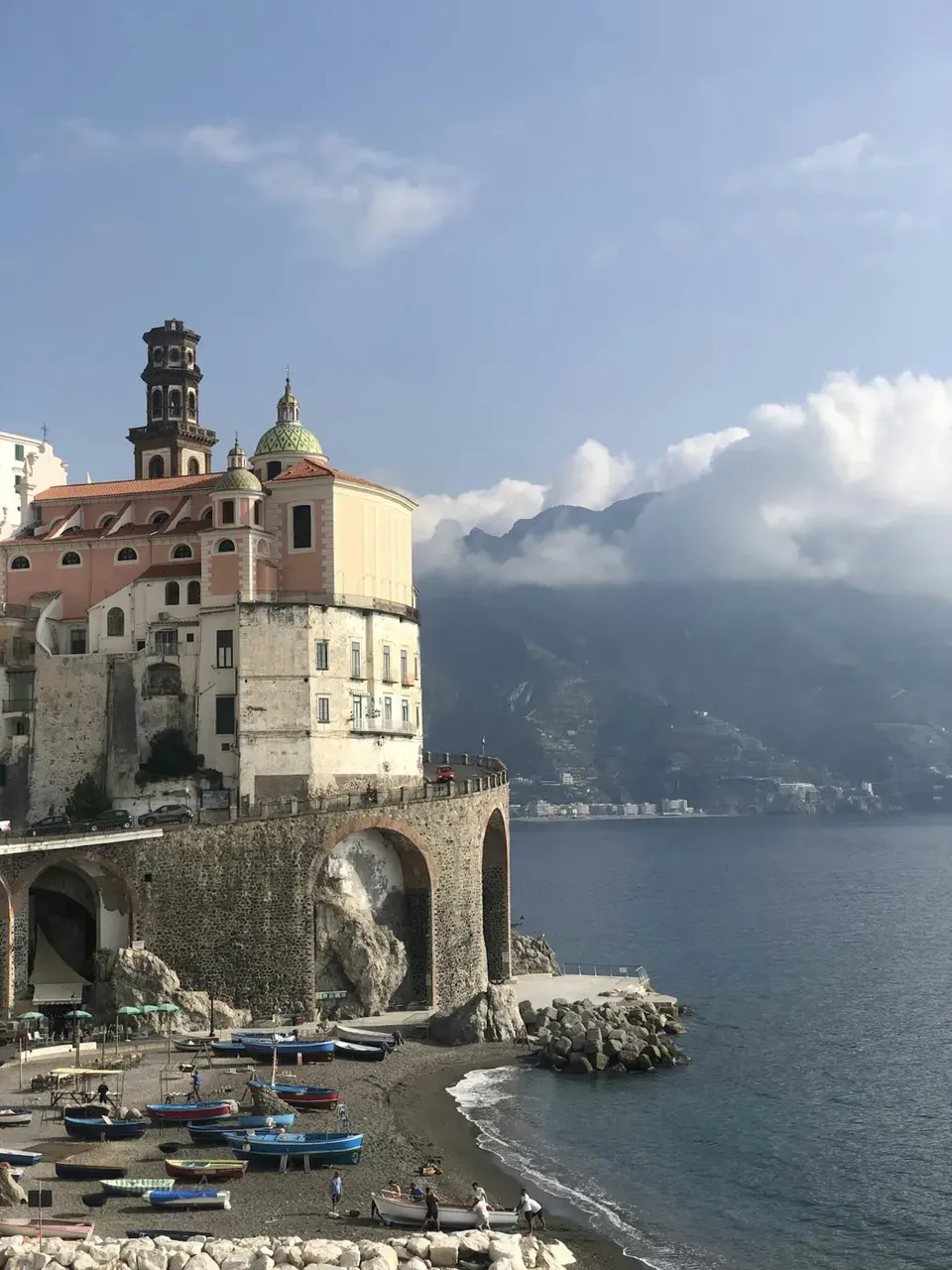
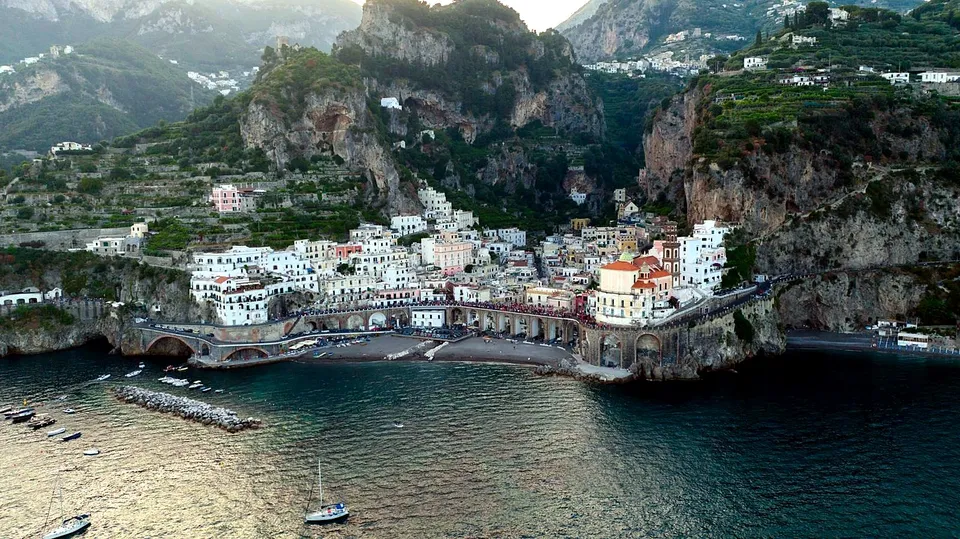
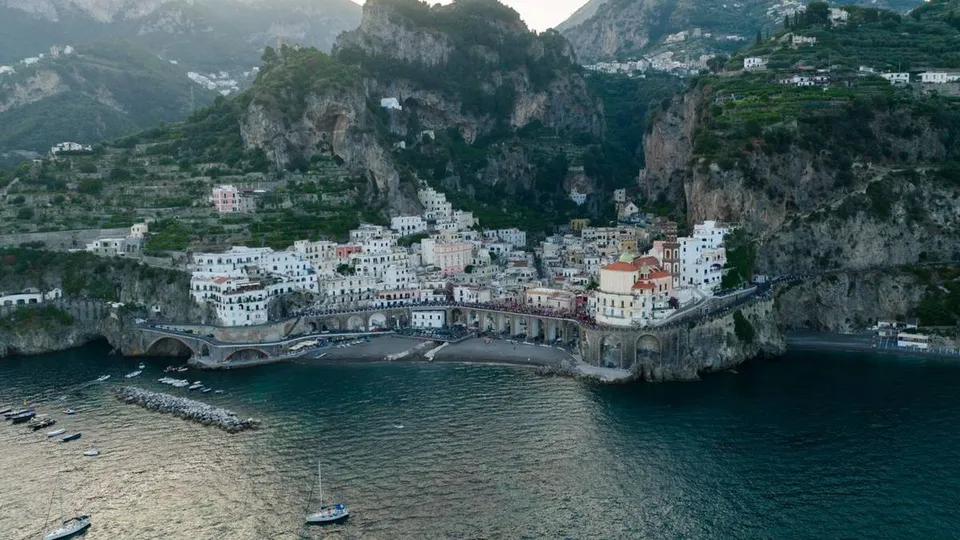
The Collegiata di Santa Maria Maddalena has a tiled dome facing the sea, and it is one of the most photogenic subjects on the whole coast. From the beach in front of the village, you can frame it with the houses around it and the mountain outline behind.
With a telephoto lens you isolate the dome and its colors, while a wider lens inserts it into the vertical shape of the settlement. If the beach is lively, include umbrellas and bathers to add scale and narrative; if you want a clean image, look for a tighter composition.
Alleyways, stairways and covered passages
Atrani’s photographic heart lies in its inner paths. Stairways that narrow, covered passages that alternate shadow and light, arches, pale walls and small glimpses of sky create almost abstract compositions.
What to look for
- The perspective lines of the stairs, best in vertical framing.
- The contrast between a dark passage and the light of a small square at the end.
- Details such as doors, railings, pots and stone surfaces.
In narrow spaces, a tripod gets in the way: it is often better to raise the ISO and lean against a wall, while avoiding blocking residents’ passage.
From above: the paths to Ravello and Pontone
To see Atrani as a single composition, you have to climb. The paths that lead toward Ravello and Pontone offer, as you gain elevation, views over the roofs, the dome and the sea.
Stop where the trail safely allows, without encroaching on the passage and without moving too close to exposed edges to find the frame. Before setting off, check the official sources of the Comune or the relevant authorities for the status of the paths, because accessibility can change. Bring suitable shoes and water: the climb is part of the experience.
The Torre dello Ziro as a vertical backdrop
Above the village, you can make out the Torre dello Ziro, which adds a high point to overall views. It works well as a reference point in shots taken from below, where the settlement rises along the slope and the eye finds a point to climb toward.
A telephoto lens lets you compress the planes and bring tower, houses and rock together in a single image; with a wide-angle lens, instead, the tower becomes a detail to discover in the landscape.
Light, seasons and the July 22 feast
The village is wedged between mountain and sea, so the light changes a lot throughout the day. The raking light of morning and late afternoon brings surfaces into relief and softens contrasts; at midday, with the sun high, it is better to focus on alleyways and details in the shade.
On July 22, the feast of Santa Maria Maddalena is celebrated: it is an opportunity for images of great documentary value, but also a moment of strong participation. Check the program through official channels and photograph with sensitivity, especially during religious moments.
If you plan to use a drone, first check current regulations and any restrictions in the area.
Small rules for better shooting
Atrani is a lived-in place, not a set. A little care makes the work calmer for everyone.
- Do not block stairs and passages for long periods.
- Avoid photographing the interiors of houses, terraces and private balconies.
- In churches, ask about opening times and filming rules.
- Along the state road above the square, pay attention to traffic.
In the end, the best photographs often come from a pause: sit in the square, watch the light change, and wait for the scene to take shape.
Frequently asked questions
What is the most photogenic spot in Atrani?
Piazza Umberto I with the arches by the sea is the village’s signature image, while the tiled dome of the Collegiata, seen from the beach, offers the most recognizable view toward the village.
Where can I find a panoramic view of Atrani?
Along the paths that rise toward Ravello and Pontone, elevated views open over roofs, the dome and the sea. Always check the status of the routes on official sources before setting out.
Can I photograph people in the square and alleyways?
Yes, but discreetly. For close-ups, always ask permission and respect the privacy of residents, homes and private terraces.
Sources and useful links
Times, prices and services can change: always check with the official sources before you travel.
Updated: 2026-10-26