A village grown in the shadow of Amalfi
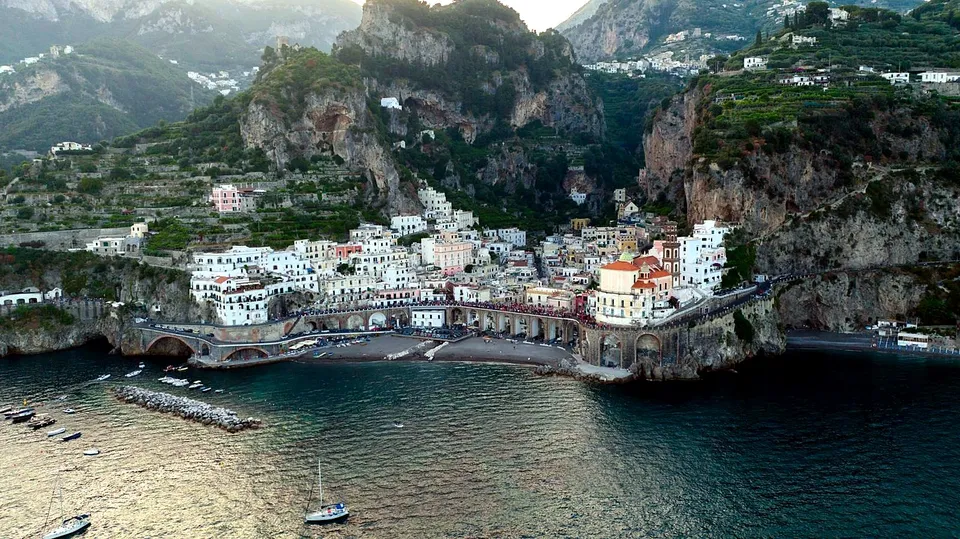
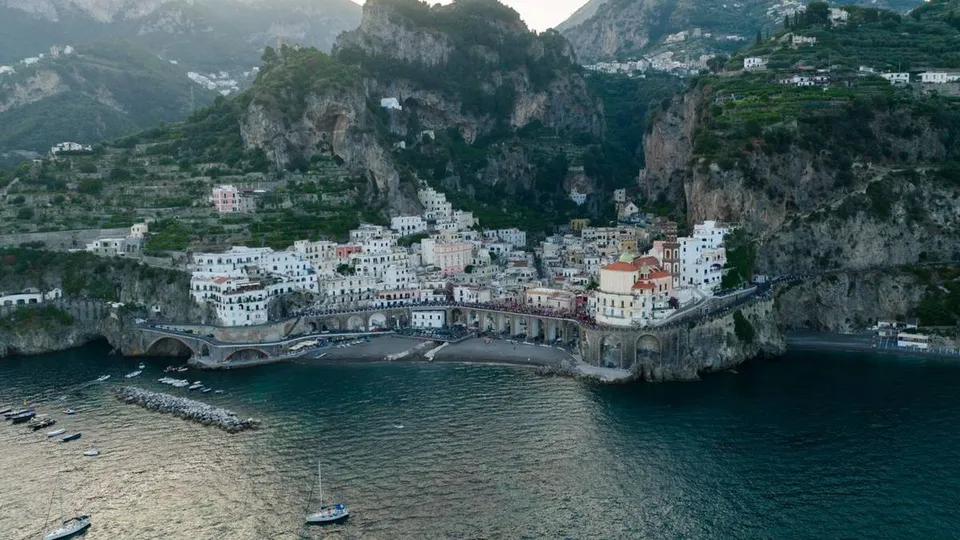
Atrani is just a few minutes’ walk from Amalfi, and to understand it you have to start from that closeness. During the period of the Maritime Republic, between the early Middle Ages and the High Middle Ages, the village was part of the same political and commercial world as the nearby city, open to trade across the Mediterranean.
Its history is not that of a suburb, but of a place where civic and religious life were intertwined with that of the capital. The churches are the most readable testimony to this bond.
San Salvatore de' Birecto, the church of the doges
According to tradition, the doges of Amalfi were crowned in the church of San Salvatore de' Birecto. The name itself recalls the "birecto", the headdress that symbolized the office. The rite took place here, in a modest building, and not in the city’s cathedral.
It is a handed-down tradition, and as such it should be told: its charm lies precisely in the fact that such a small place was associated with such a solemn moment. On entering, it is worth observing the architecture calmly and, if available, reading the information panels.
To know when the church can be visited, it is best to check the official parish or municipal sources, because opening hours may change.
The Collegiate Church of Santa Maria Maddalena
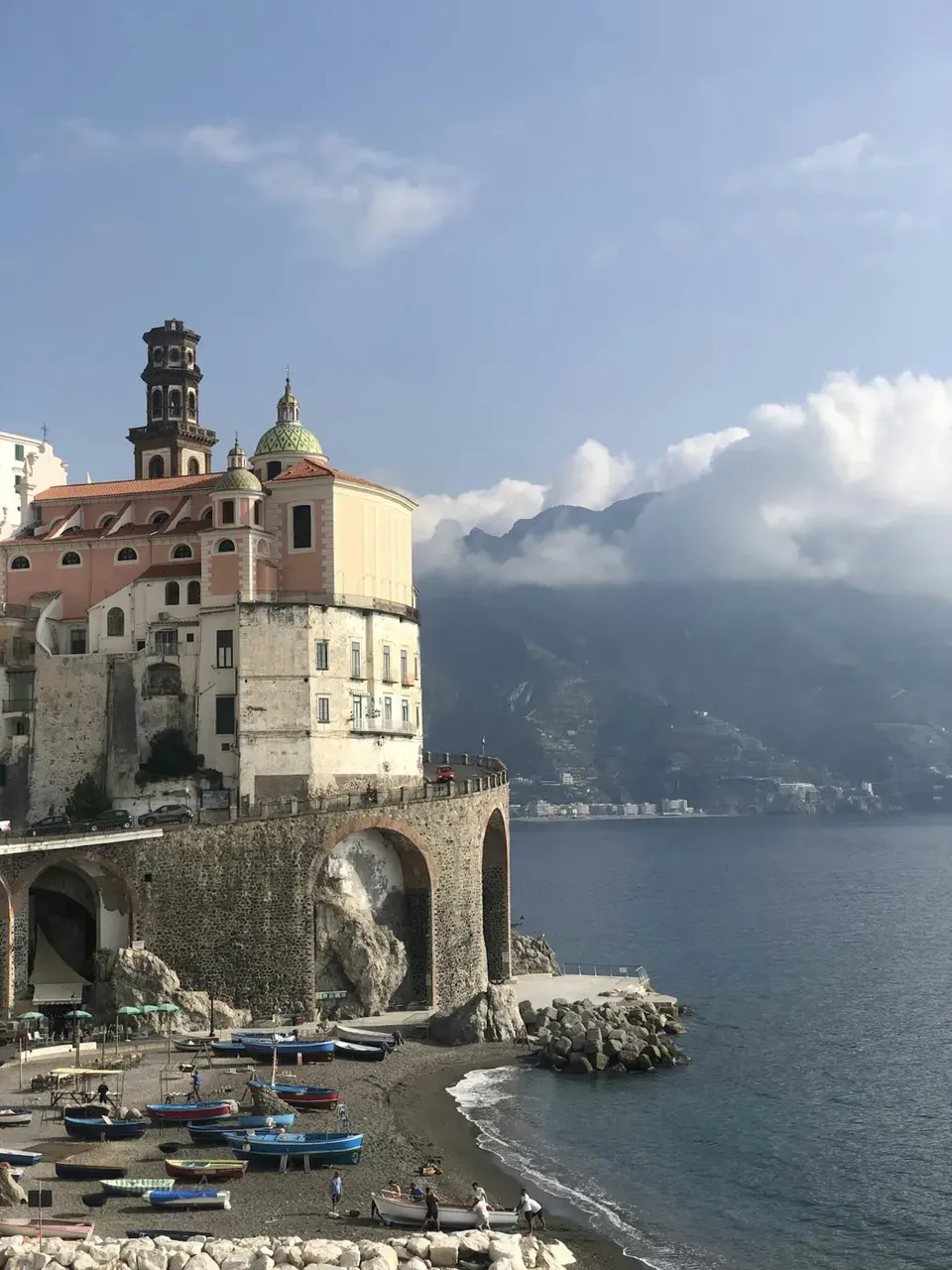
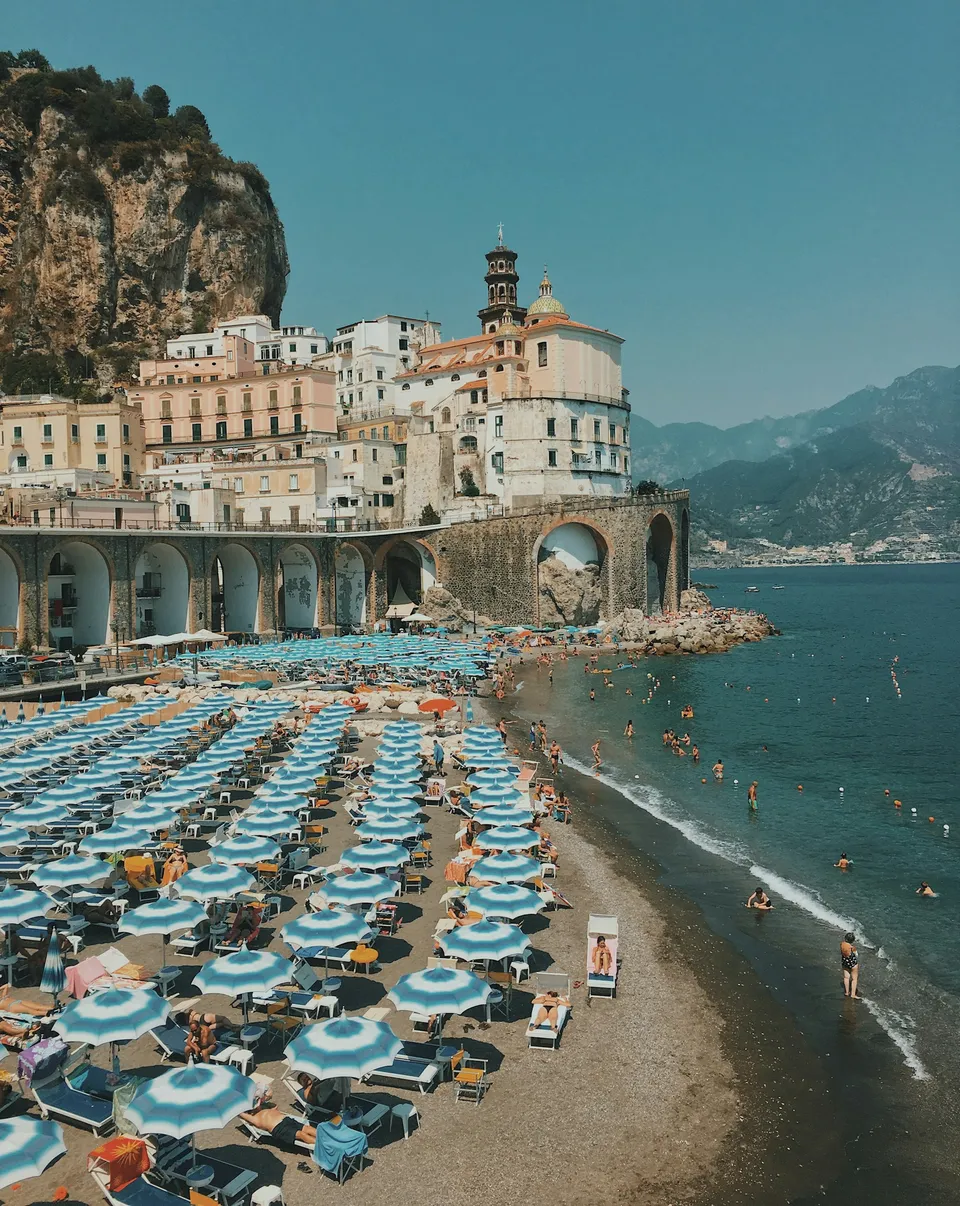
This is the building that dominates the village profile. The Collegiate Church is dedicated to Santa Maria Maddalena, patron saint of Atrani, and its maiolica-tiled dome looks out over the sea: from afar it is one of the most recognizable features of the coast between Amalfi and Minori.
The colorful maiolica is typical of the Coast’s architectural tradition and creates a lively contrast with the light stone and the blue water. The bond with the saint is renewed every year with the feast on 22 July, which marks the most heartfelt moment in the village’s religious calendar.
The sea as a gateway
Atrani is built vertically, squeezed between the mountain and the water. The main square, Piazza Umberto I, is enclosed by houses and has access from the sea under the arches of the state road. This solution, the result of a Coast adapted over time to the needs of modern traffic, recalls that the village was born as a landing place.
Knowing that the relationship with the shore was once direct helps you read what you see better: the churches look toward the water because people, goods and news arrived from there.
The Torre dello Ziro above the village
Looking up beyond the rooftops, you can see the Torre dello Ziro, visible above Atrani. The towers of the Coast are generally remembered as part of the lookout and defense system of a shoreline long exposed to seaborne incursions, and this one is part of the village’s historic landscape.
It is more something to observe than a stop to plan: it helps you imagine the relationship between the built-up area, the relief behind it and the control of the territory.
Reading history while walking
The sacred places of Atrani are not isolated, but connected by alleys, stairways and covered passages that you travel on foot. These routes give a sense of the scale of a center that arose with little space and was organized compactly.
From the village, paths also climb toward Ravello and Pontone, ancient links between sea level and the higher settlements. For the condition and accessibility of the paths, always check the latest information from the local authorities before setting out.
A few tips
- Enter churches with appropriate clothing and respect for any services.
- Wear comfortable shoes: there are many stairways.
- Always check times and opening hours on official sources.
Frequently asked questions
Where were the doges of Amalfi crowned?
According to tradition, in the church of San Salvatore de' Birecto in Atrani. It is a story handed down over time, tied to the village’s role in the history of the Maritime Republic of Amalfi.
Are the churches of Atrani always open to visitors?
This cannot be guaranteed: opening hours depend on the parish, religious services and the time of year. It is best to check official sources before visiting.
When is the feast of the patron saint celebrated?
The feast of Santa Maria Maddalena takes place on 22 July. For the detailed program, refer to the official notices from the municipality and the parish.
Sources and useful links
Times, prices and services can change: always check with the official sources before you travel.
Updated: 2026-10-26